
Last updated November 21, 2026
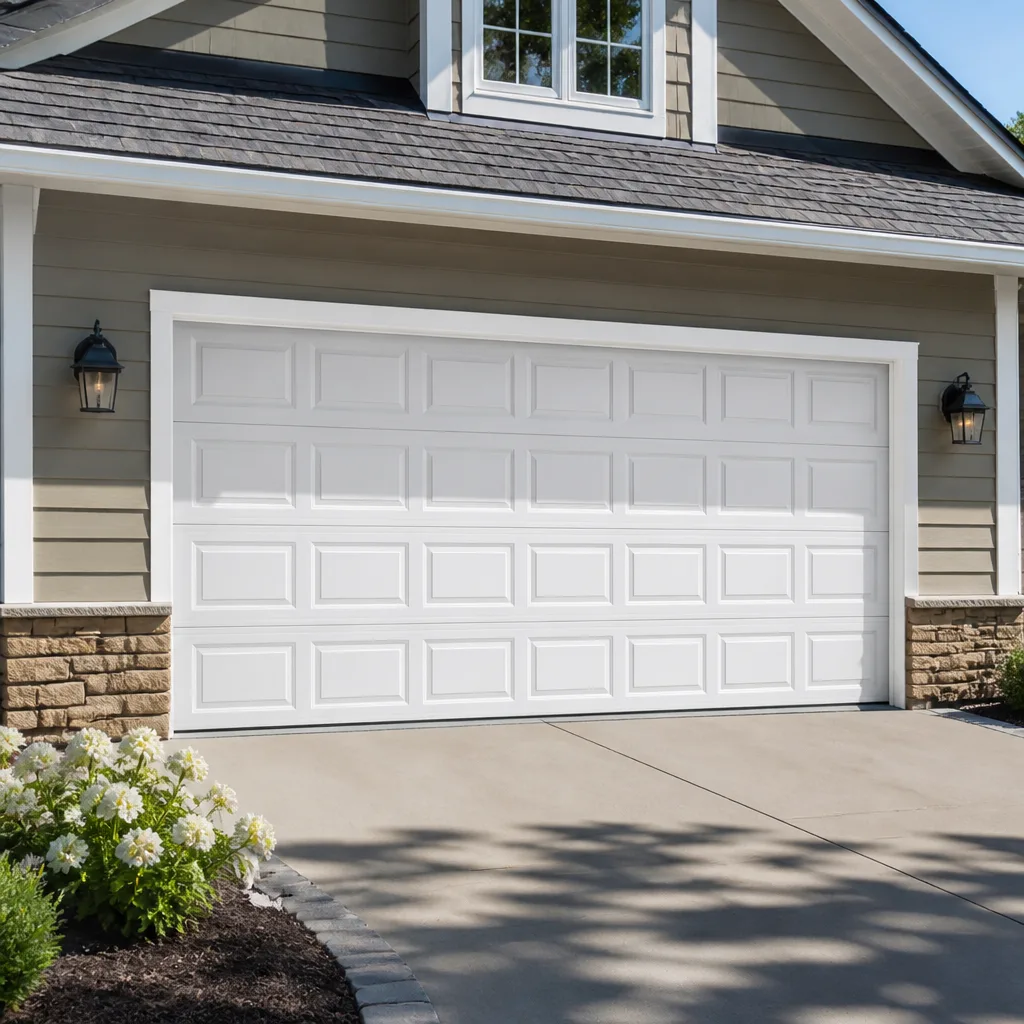 Raised-panel steel
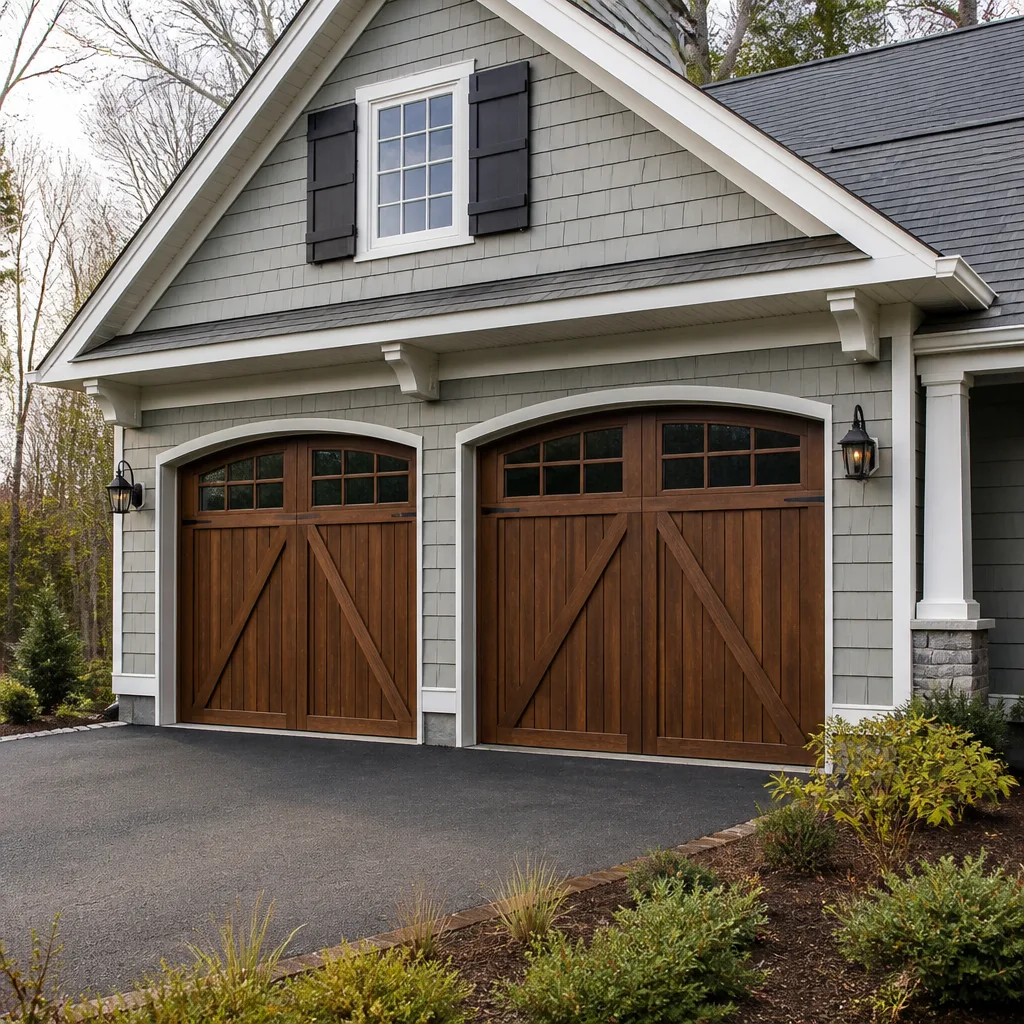 Carriage house
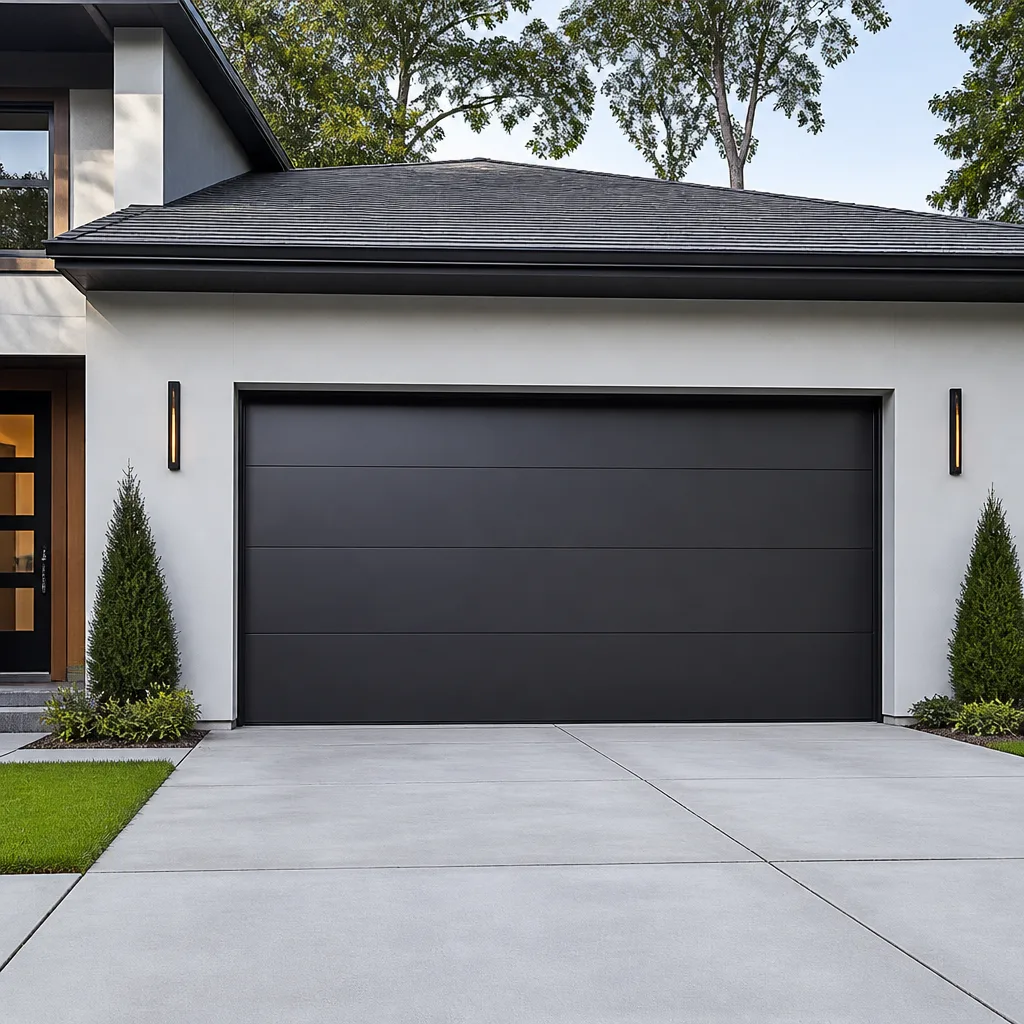 Modern flush
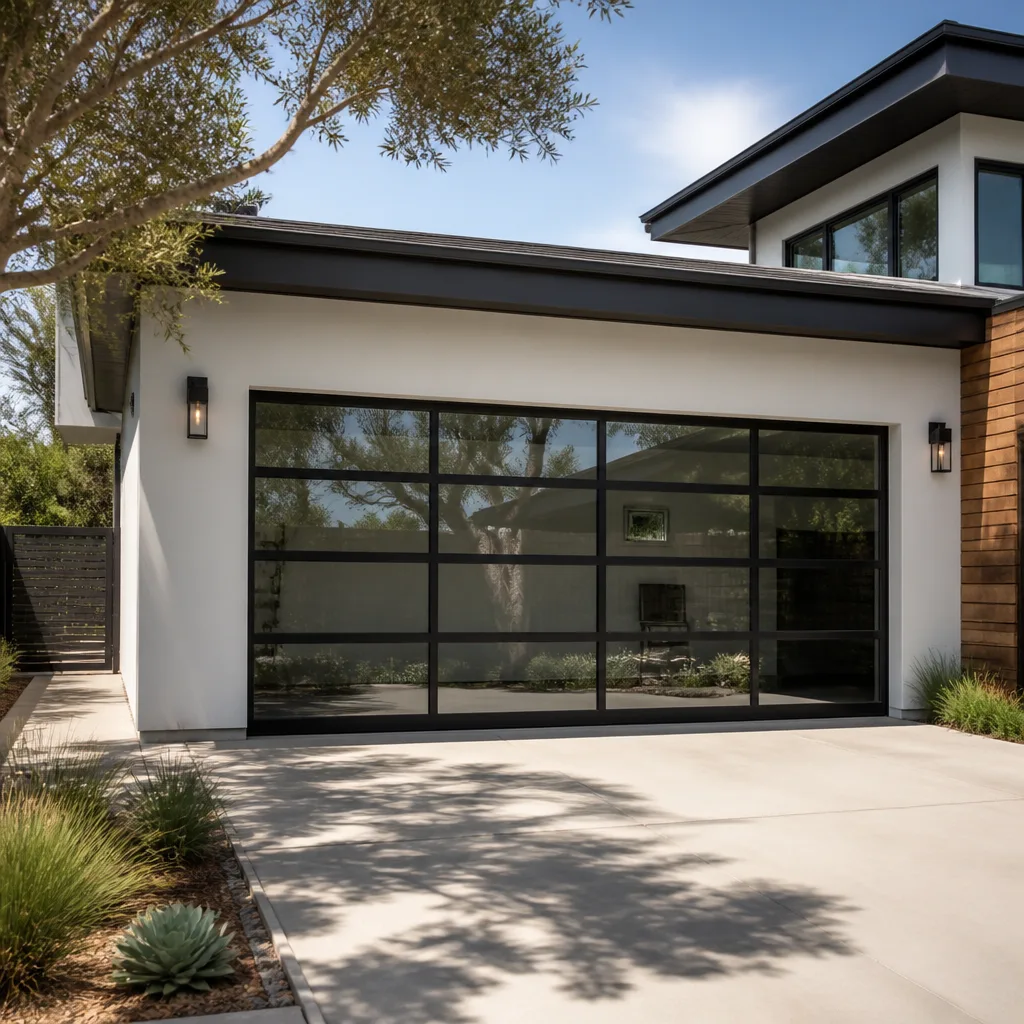 Full-view glass
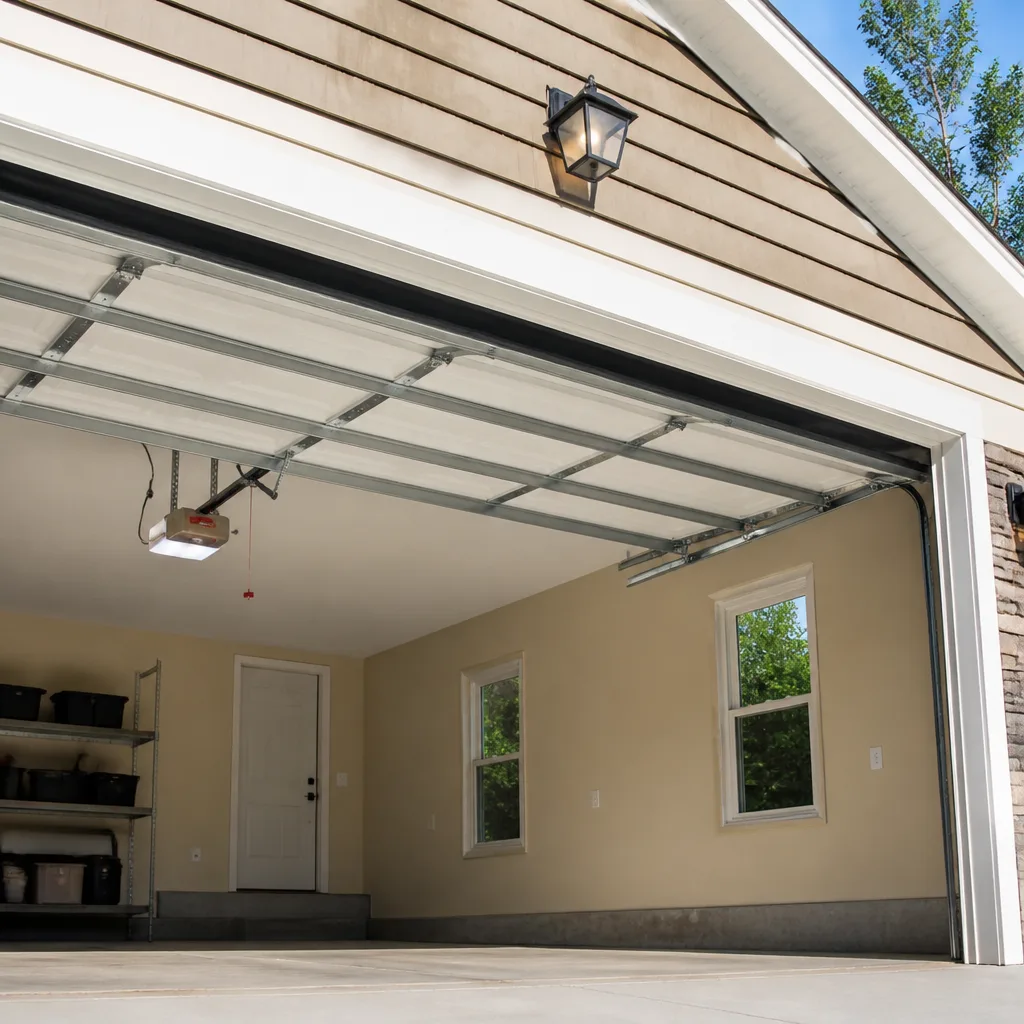 LiftMaster openers
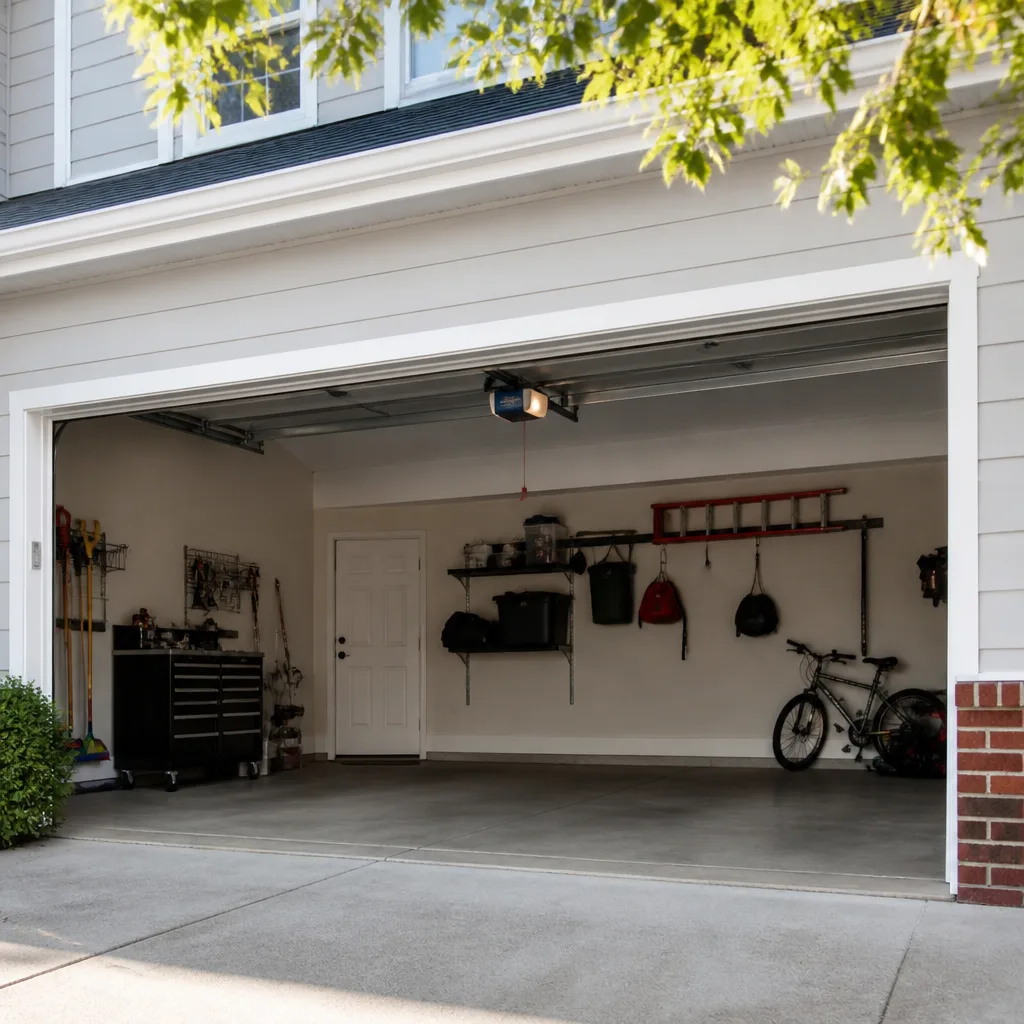 Chamberlain openers
Full 25-point door and opener safety check with every visit - springs, cables, rollers, tracks, and your LiftMaster or Chamberlain opener included
You get a price before we start. It does not change when the pro arrives.
Get your free estimateGarage Door Emergency Preparedness Guide for Port Saint Lucie Homes
Most Port Saint Lucie homeowners think about their garage door twice: when they buy a house and when it breaks. The gap between those two moments is where trouble is built. A door that binds in July, a torsion spring that’s lost tension, a bottom bracket that’s starting to pull free from the jamb – these don’t announce themselves. They wait for a Saturday night when your car is inside, or for the afternoon a storm spins up off the coast and every window and door in the house becomes the pressure boundary. This guide covers both kinds of garage door emergency in Port Saint Lucie: the mechanical failure that locks you out, and the wind event that tests whether your door holds. You’ll find the real procedures, the parts that matter, and the calls worth making before anything goes wrong.
Quick Answer
Garage door emergencies in Port Saint Lucie fall into two categories: mechanical failures (broken springs, snapped cables, opener faults, off-track doors) that need same-day repair, and wind-driven failures during storms that can compromise the whole structure if the wrong door is in place. For mechanical failure, the safest move is to leave the door closed, keep hands and cars clear, and call a garage door specialist. For storms, the door needs a wind rating and intact hardware – and it should never be manually locked against a non-impact-rated design.
Styles & brands we work with
- Raised-panel steel
- Carriage house
- Modern flush
- Full-view glass
- LiftMaster openers
- Chamberlain openers
Table of Contents
- The Two Kinds of Garage Door Emergency in Port Saint Lucie
- How to Operate Your Garage Door During a Power Outage
- Pre-Hurricane Door Protocol for Port Saint Lucie Homes
- Why You Should Not Lock a Non-Impact Door During a Storm
- How to Assess Post-Storm Door Damage Safely
- What to Do When the Door Fails With a Car Inside
- What to Have Ready When You Call for Emergency Service
- Common Mistakes to Avoid
The Two Kinds of Garage Door Emergency in Port Saint Lucie
Port Saint Lucie sits in a part of Florida where the garage door does double duty. Most homes here are single-story or split-level layouts with an attached two-car garage, and for a lot of families the garage is the everyday entry – you come home, you pull in, you walk straight into the laundry room or kitchen. When the door won’t lift, you’re not mildly inconvenienced. You’re locked out of the primary route into your own house.
The second kind of emergency comes from the sky. The Treasure Coast sees hurricane season run from the start of summer through late fall, and every home in Port Saint Lucie that has a garage door has a structural opening on the windward face. A garage door that fails under wind pressure doesn’t just damage itself. It releases the pressure inside the house, and the roof can lift or the walls can push out. That’s the difference between a repair and a rebuild.
- Mechanical emergency: broken torsion spring, snapped lift cable, stripped opener gear, door off track, remote or wall station dead. Fixable, usually same day.
- Wind emergency: door deflects, panels dent and buckle, tracks pull loose, or the door blows in. This is a structural event, not a mechanical one.
The preparation is different for each. Knowing which one you’re facing, and when to stop and call, is the whole point of this guide. If you’re already past the preparation stage and the door is broken right now, our page on Garage Door Repair Port Saint Lucie covers the repair side in detail.
How to Operate Your Garage Door During a Power Outage
When the power goes out, your garage door isn’t stuck shut – it’s just been disengaged from the opener. Every opener sold in the last few decades has a manual release built in. LiftMaster, Chamberlain, Genie, and Craftsman units all use the same basic mechanism: a red pull cord or rope hanging from the trolley carriage that runs along the center rail.
Here’s the safe sequence:
- Clear the doorway. Make sure no one is standing under the door and nothing is in its path. A manually released door is heavier than it feels and it has no reverse sensor active.
- Pull straight down on the red cord. You’re decoupling the trolley carriage from the drive belt or chain. You’ll hear a click. Don’t yank it sideways – that can jam the release in a half-engaged position.
- Lift the door by the handle or bottom rail. A properly balanced door should lift with one hand and stay where you leave it. If it’s suddenly heavy, a spring has failed – stop and leave it closed.
- Re-engage after power returns. Close the door fully, then pull the release cord toward the opener housing until the carriage clicks back onto the drive. Test the opener from the wall station before trusting it.
If the trolley carriage is stuck: don’t force it. A carriage that won’t release cleanly often means a bent release arm or a trolley that’s jumped the rail. Forcing it can send the door down uncontrolled. On a Genie or Chamberlain opener with a chain drive, a stuck trolley usually needs a technician to reset the rail alignment.
Locking the door once it’s disconnected: most manual release systems are not locks. If you’ve disconnected the door at the trolley, it can still be lifted from outside. If your door has a slide lock or keyed lock, engage it while the door is disconnected. If it doesn’t, and you’re leaving the house unattended during an outage, that’s a call to make. For opener-specific troubleshooting on your exact brand, our garage door opener repair page walks through the common failures.
Pre-Hurricane Door Protocol for Port Saint Lucie Homes
Here’s the part most homeowners skip: a door with the right wind rating can still fail if the hardware is compromised. Years of heat cycling and humidity expand and contract steel, and a bottom bracket or hinge that was tight at installation can loosen enough that wind load pulls the panel out of alignment. The rating on the sticker assumes the door is intact.
Before hurricane season, do a visual integrity check:
- Bottom brackets and hinges. Look for rust at the fastener holes, cracks in the bracket plate, or screws backing out of the jamb. Any of these means the door can’t carry its rated load.
- Horizontal tracks. Run a straight edge along the horizontal track. Any deflection – a bow toward or away from the door – means the panels can walk out of the rollers under wind.
- Panels. Look for existing dents, especially near the center of a wide panel. A dented panel has already lost some of its stiffness, and a compromised section can peel away in a gust.
- Cables and drums. Slack on one side of the door, or a cable sitting off the drum, means the door’s balance has shifted. Don’t run it in a storm.
- Seals. A worn threshold seal lets water in during driving rain, and standing water accelerates corrosion at the base of the tracks.
What a horizontal brace kit does. A brace kit is a set of steel struts bolted horizontally across the inside of the door panels. It stiffens the door against wind pressure by preventing the wide, flat panel from bowing in. When a brace kit is required is set by the door manufacturer’s wind-load documentation and by your local building department – if you’re not sure whether your door needs one, ask the city’s building department and check the manufacturer’s spec sheet. A door that’s rated but unbelted in a storm is an open question. Our garage door installation page explains how wind-rated doors and bracing are specified on new installations in Port Saint Lucie.
Why You Should Not Lock a Non-Impact Door During a Storm
It seems like the obvious move: door rated or not, put the manual lock on and hold it shut. It’s the wrong move, and it’s dangerous.
Garage doors work on a pressure differential. Under storm load, wind pushes on the outside of the door and tries to create a pressure pocket inside the garage. A properly rated door is engineered to flex, shed, or hold under that load in a specific way. A manual lock or slide bolt prevents that flex. Locking a non-impact door during a storm turns the door into a rigid capture point, and the pressure has nowhere to go but into the panels, tracks, and framing around the opening.
The safer approach for a non-impact-rated door during a hurricane:
- Do not engage the manual lock. Leave the door free to flex as designed.
- Keep the car out of the garage if you can. A garage door failure with a car inside limits what you can do afterward.
- Clear the area around the door. Anything loose on the inside that could get blown into the door adds to the failure risk.
- Know your door’s rating. The label on the door panel or the owner’s documentation tells you what wind speed it was tested to. If there’s no label, treat the door as unrated until you confirm.
If your door is impact-rated and braced to spec, the manual lock can go on. The point is knowing which one you have before the storm arrives, not guessing at 6 p.m. on a Friday with a warning box on the TV.
How to Assess Post-Storm Door Damage Safely
After the storm passes, do not walk up and press the opener button. That’s the single most common way people turn a repairable door into a dangerous one. A door that took wind load may be sitting in a state where the next lift pulls a panel off the roller or drops a cable.
Assess first, from a safe distance:
- Look at the tracks. Stand in the garage and sight down each vertical track. A deflection of even a quarter inch is a problem – the rollers will bind, and a panel can jump out. Don’t try to run the door.
- Check panel integrity. A panel with visible denting along a seam, or a hinge that’s separated from the panel, means the section has lost its structural role. That panel needs replacement, not a hammer.
- Look at the cables. Slack on one side means a drum has slipped or a cable has jumped. A drum that has slipped under tension is a serious hazard – do not touch it, do not try to reset it, and do not run the opener.
- Confirm the door is closed all the way. If the door is bowed at the bottom, the safety reverse may not engage correctly when you try to operate it later.
- Check the bottom brackets. Cracked or pulled bracket plates mean the door isn’t safe to lift.
If any of those checks fail, the call is to a garage door specialist, not the internet. If everything looks clean, you can try a single lift from the wall station with everyone clear of the door. If it binds, stop immediately.
One more thing specific to Port Saint Lucie after a storm: standing water in the tracks and near the bottom brackets is common. Dry the tracks before you run the door, and look at the bracket fasteners for fresh rust – a bracket that’s started to pit during a wet week is a bracket that will fail at the next storm. For any repair after a storm, quick diagnosis saves a second failure during the cleanup.
What to Do When the Door Fails With a Car Inside
This is the scenario that matters most to a Port Saint Lucie homeowner with a car in the garage and somewhere to be. The door is closed, the car is inside, and the opener doesn’t respond or the door lifts an inch and stops.
Take these steps in order:
- Stay calm and check the obvious first. Wall station power, breaker, remote battery, safety sensor alignment. Many “dead door” calls are a tripped breaker or a sensor knocked out of line by a broom handle.
- Look through the gap. If the door rises a few inches and stops, that’s the opener’s safety reverse overriding the lift. Usually a broken spring. The door will feel very heavy when you try to lift it – stop.
- Use the manual release, but only if the door is balanced. Pull the red cord, then push the door up with one hand. If it lifts easily and stays where you leave it, you can move the car out. If it wants to fall closed, do not stand under it, and do not try to hold it up.
- Never force the door with the vehicle. This is the one mistake that turns a $200 repair into a door replacement. A car backing into or pushing against a closed door damages panels, tracks, brackets, and often the opener, and it can injure the driver when the door gives suddenly.
- Know when to stop. A sensor or remote problem is usually a 10-minute fix. A door that lifts and stops, a door that won’t move at all, or a door that looks crooked on one side is not a 10-minute fix. Call a technician and leave the door alone.
If you’ve got a car trapped and can’t get the door up safely, that’s a same-day call. We answer 24/7, with fast dispatch from 7am to 7pm, Sunday through Friday. If the call comes in outside that window, it’s booked into the next opening. Requesting garage door repair through us gets a technician who knows your brand – whether it’s a LiftMaster torsion system or a Clopay panel door – and understands what state the door is in before arriving on site.
What to Have Ready When You Call for Emergency Service
The faster the dispatcher understands what failed, the faster the right part gets sourced and the right technician gets sent. That’s especially important in Port Saint Lucie, where a lot of doors are older, originally builder-installed units, and parts availability on any given day depends on exactly what’s up there.
Before you call, have these ready:
- Door brand. LiftMaster, Chamberlain, Genie, Clopay, Amarr, Wayne Dalton, Craftsman, Raynor. It’s usually printed on the opener housing or on the door panel’s edge label.
- Opener model number. On the back of the motor housing, or on the label under the light cover. Five characters that save ten minutes of guessing.
- Spring type. Torsion spring across the top of the door, or extension springs along the horizontal tracks. If you don’t know, no problem – say so.
- Door type. Sectional panel door, roll-up, or single-piece tilt-up. Single-piece doors behave very differently in a failure.
- What the door is doing. “Won’t move at all” and “lifts an inch and stops” are two entirely different diagnoses. So are “moves but won’t close” and “closed but won’t open.”
- What you’ve already checked. Breaker, sensors, remote battery, manual release. Saying what’s been ruled out saves time.
When you’ve got those details, a call to (877) 713-8285 goes to a team that handles parts supply, repair, and opener service in one place. No runaround, no coordinating a sub. One call, and the visit is scheduled around what you’ve told us.
Common Mistakes to Avoid
- Pulling the manual release without checking the balance first. A released door with a failed spring is a falling weight. Pull the cord, then test the door with one hand – if it’s heavy or won’t hold, stop.
- Locking a non-impact door during a hurricane. A manual lock prevents the flex the door is designed to handle. The pressure goes into the panels, tracks, and framing instead.
- Running the opener after a storm without a visual check. A door that took wind load may have a deflected track or slack cable. The next lift can throw a panel off the roller.
- Trying to force the door up with the vehicle. Backing a car into a jammed door bends panels, tracks, and brackets. It never frees the door.
- Assuming a dented panel is cosmetic. A dented panel has lost stiffness. Under wind, that section peels away first and can take the rest of the door with it.
- Calling without the model number. On a Port Saint Lucie afternoon with a car trapped in the garage, the five minutes spent finding the opener model is the fastest way to the right part.
- Ignoring a cable that lives off the drum. A cable that’s slipped off the drum is a load-bearing failure in progress. Do not run the door, do not try to reset it.
See the difference
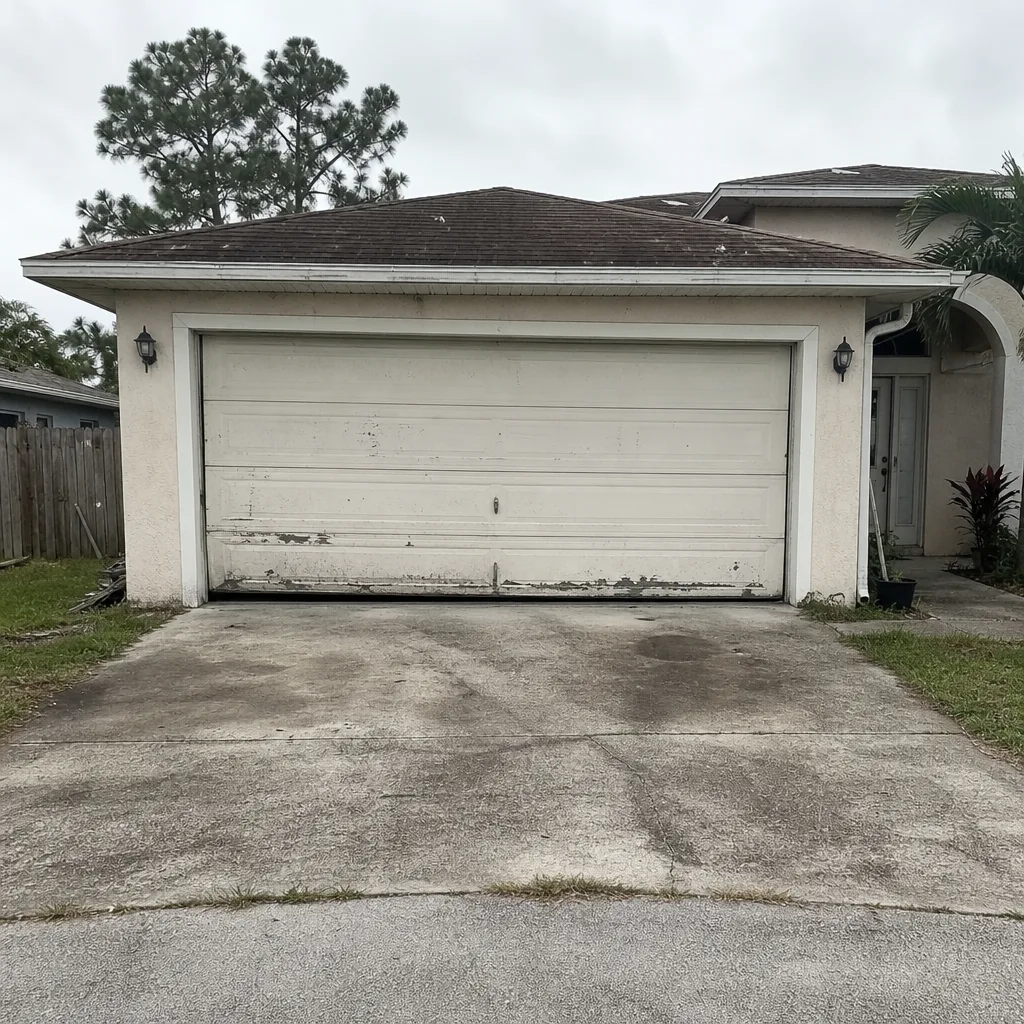 Before
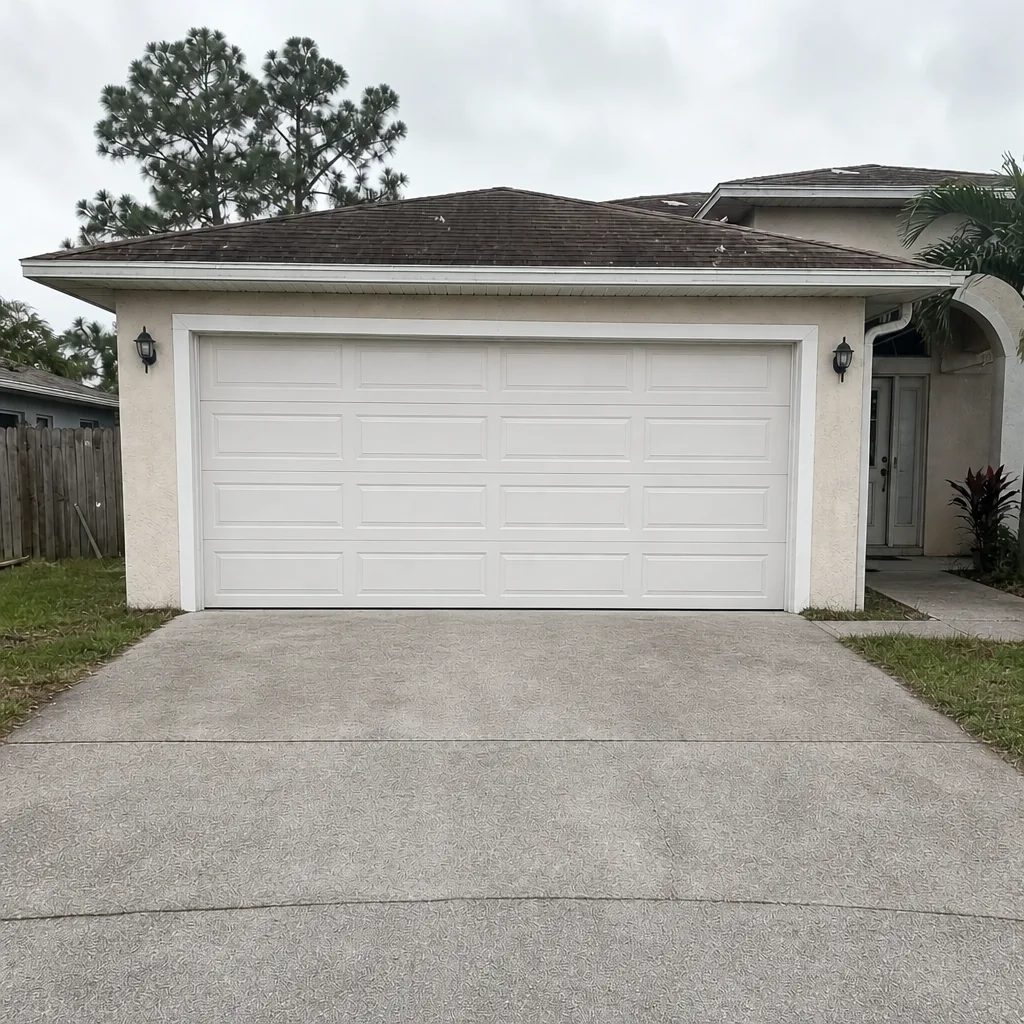 After
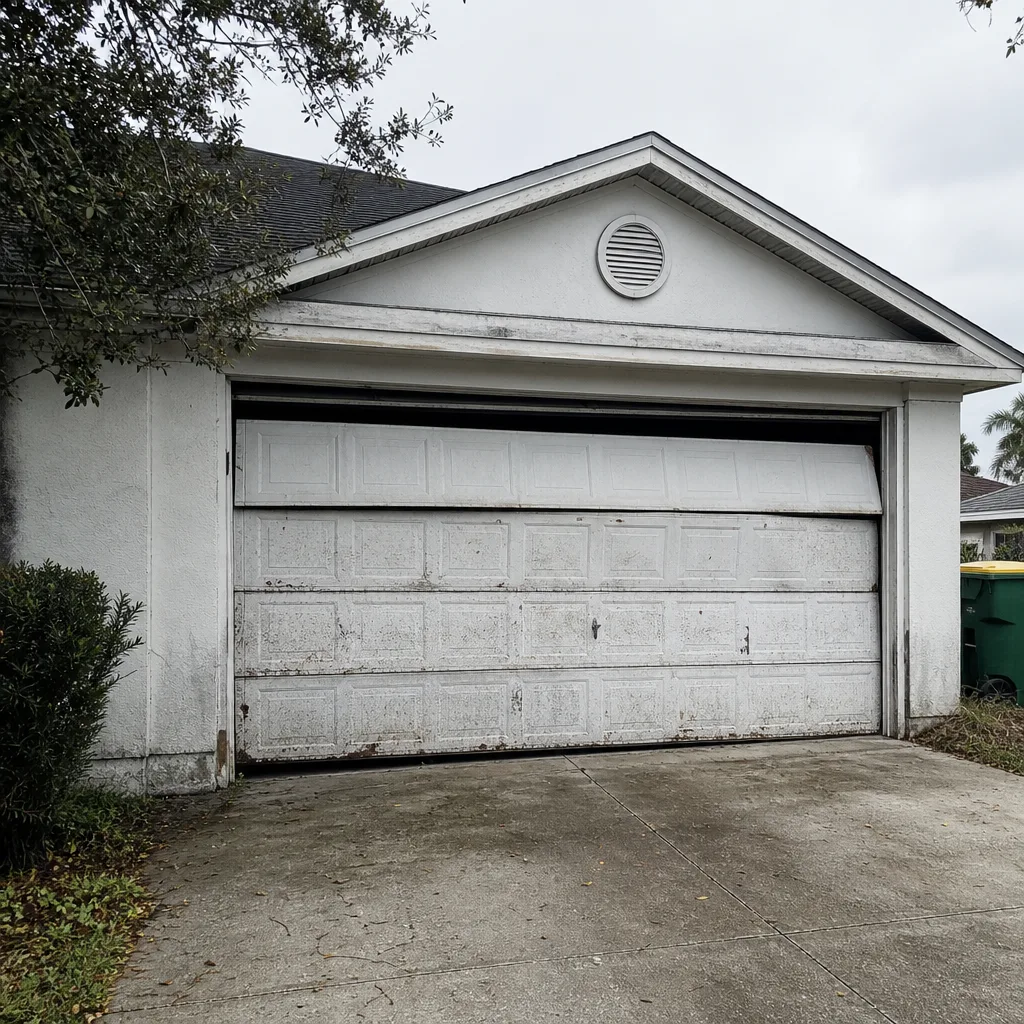 Before
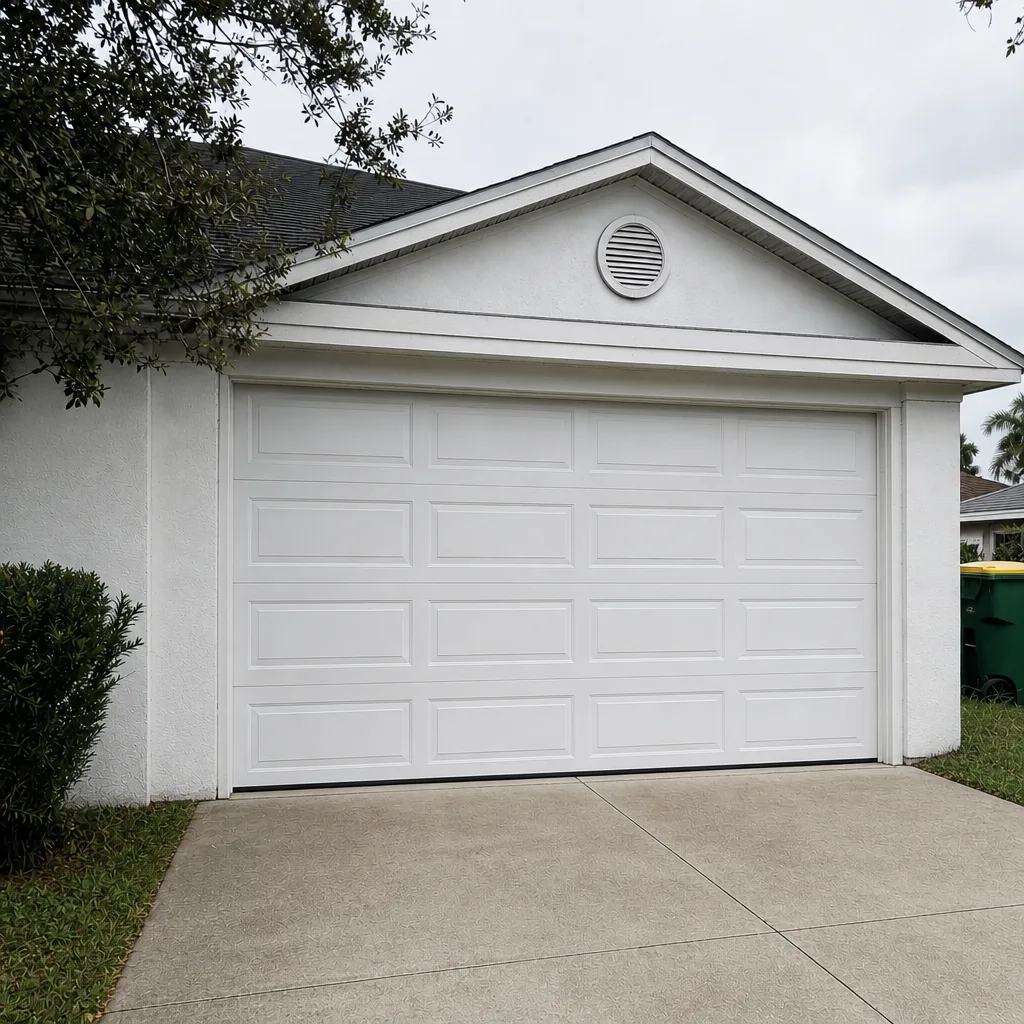 After
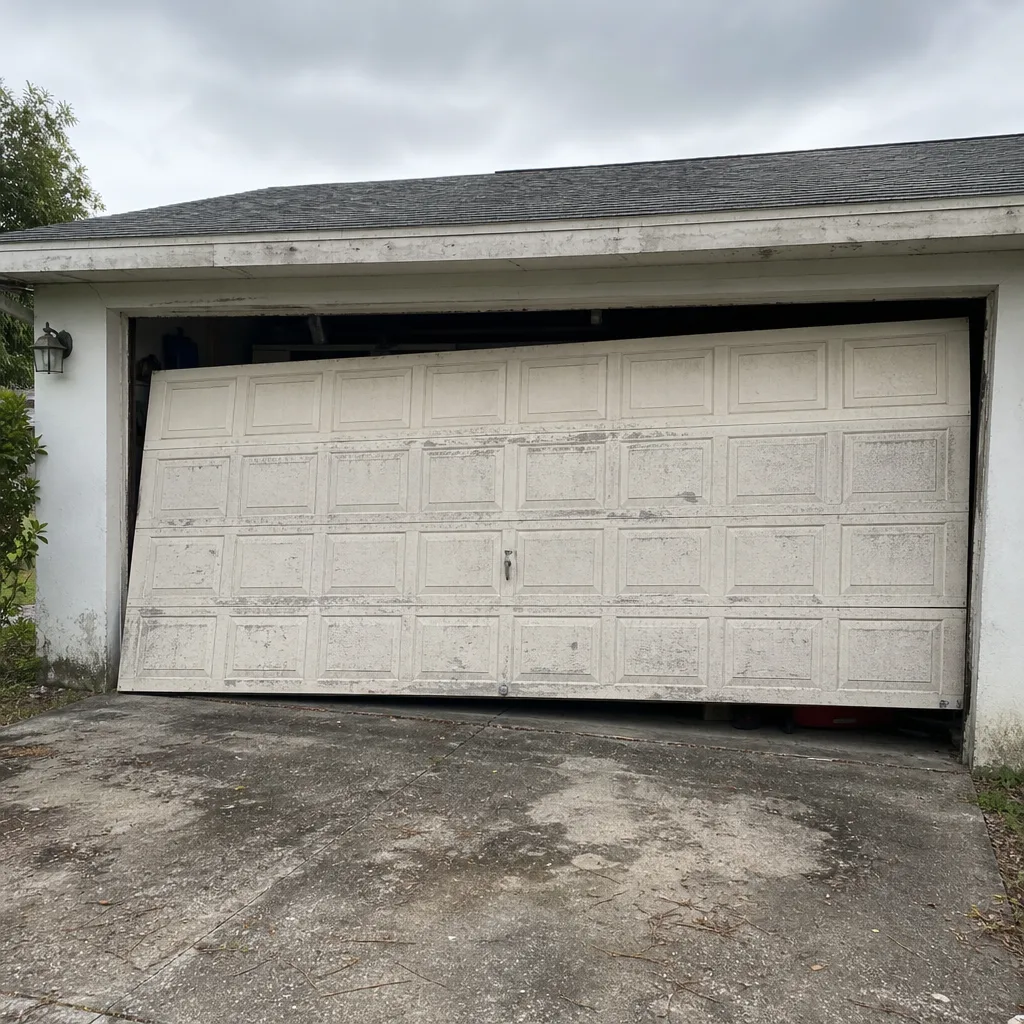 Before
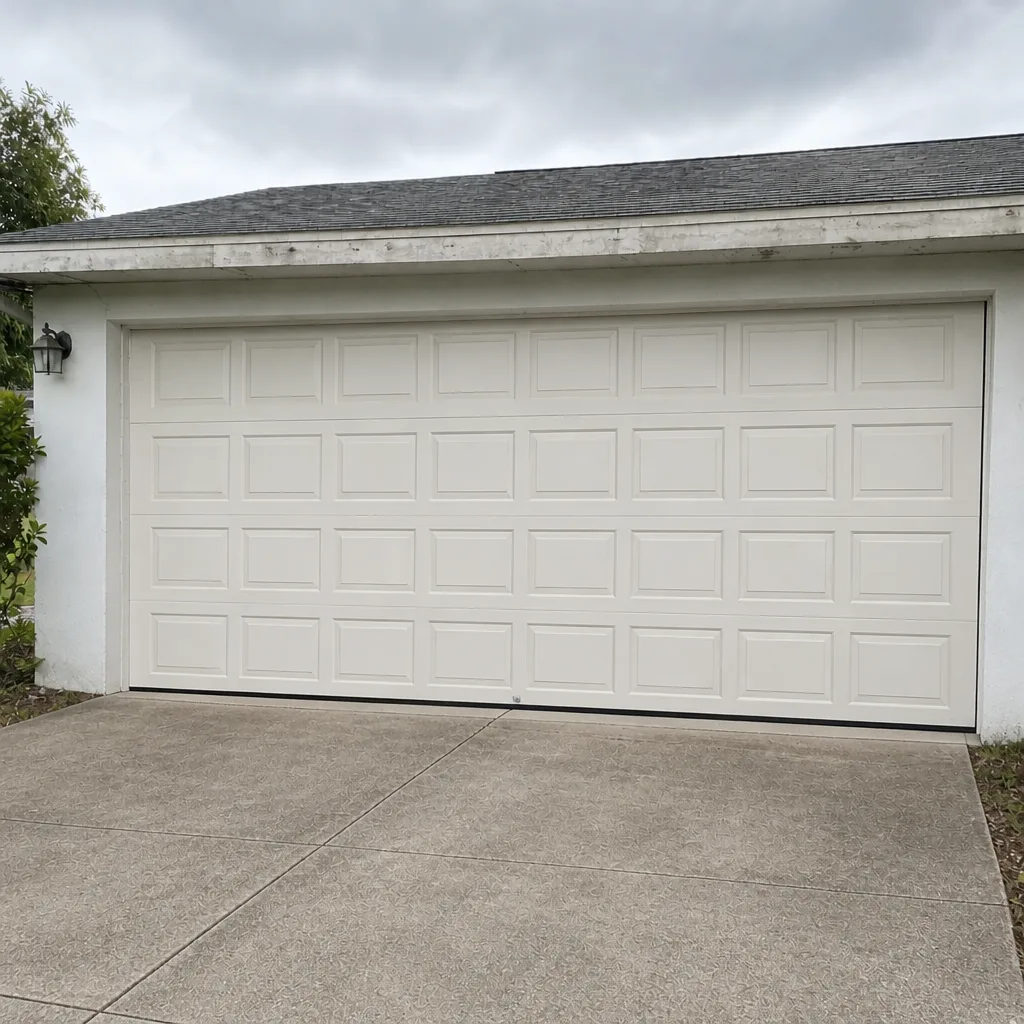 After
When to Call a Professional
Call a professional when a spring has failed, when a cable is slack or off the drum, when a track is deflected, or when the door lifts and stops. Those are the cases where the next lift by an untrained hand can cause serious injury or a much larger repair. Call when a storm has damaged panels, brackets, or tracks. Call when you’ve pulled the manual release and the door won’t hold itself up. On the mechanical side, an opener fault is often a quick DIY check, but a door that stops midway or drags is not.
Torsion spring work in particular is not a homeowner job. The springs hold enough energy to cause serious injury, and a mismatched replacement can fail within a season. Garage Door Repair Port Saint Lucie offers free estimates in Port Saint Lucie – call (877) 713-8285.
Frequently Asked Questions
Yes, if your door is balanced. Pull the red manual release cord down to disconnect the trolley, then lift the door by the bottom rail. If it’s heavy or won’t stay open, a spring has likely failed and the door should stay closed until a technician has inspected it.
Only if the door is impact-rated and braced to specification. A non-impact door should be left unlocked so it can flex under wind pressure. Locking it turns the door into a rigid capture point and sends the pressure into the panels and framing.
The rating is on the label on the door panel or in the manufacturer’s documentation. If you can’t find it, treat the door as unrated. Your local building department can tell you what the current requirement is for your address.
It usually means a torsion or extension spring has broken. The opener hits the weight of an unassisted door and the safety reverse kicks in. Don’t repeat the attempt – call a garage door specialist.
Only after a visual check. Look at the tracks for deflection, the panels for dents along the seams, and the cables for slack. If any of those look wrong, don’t run the door. Get it inspected first.
No. Pushing or backing into a closed or jammed door bends panels, tracks, and brackets, and it can injure you when the door gives suddenly. Use the manual release only if the door is balanced, and call a technician if it isn’t.
The Bottom Line
Port Saint Lucie’s two garage door emergencies need two different preparations. For mechanical failure, know where the manual release is, know the balance of your door by feel, and keep the opener model number on hand so the first call goes to the right parts. For storm season, check the brackets, hinges, tracks, and panels before anything on the weather radar is aimed at the Treasure Coast – and don’t lock a door that isn’t rated to carry the load. If anything looks off, get a written estimate before the season arrives. A prepared homeowner ends up with a working door. An unprepared one ends up replacing a wall.
If you’re in Port Saint Lucie and something on that door doesn’t feel right, call (877) 713-8285 for a free estimate. We answer 24/7, with fast dispatch from 7am to 7pm, Sunday through Friday.
Written by the team at Garage Door Repair Port Saint Lucie.