
Last updated November 21, 2026
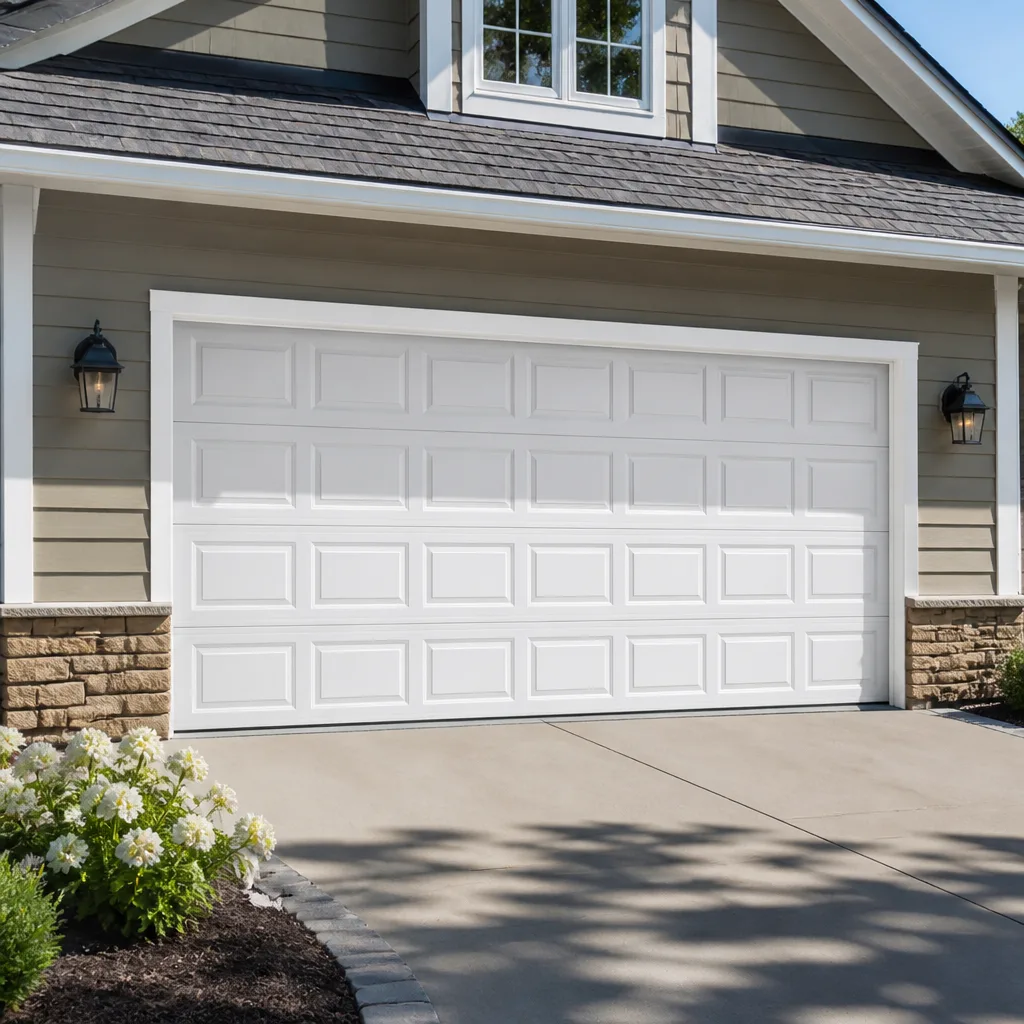 Raised-panel steel
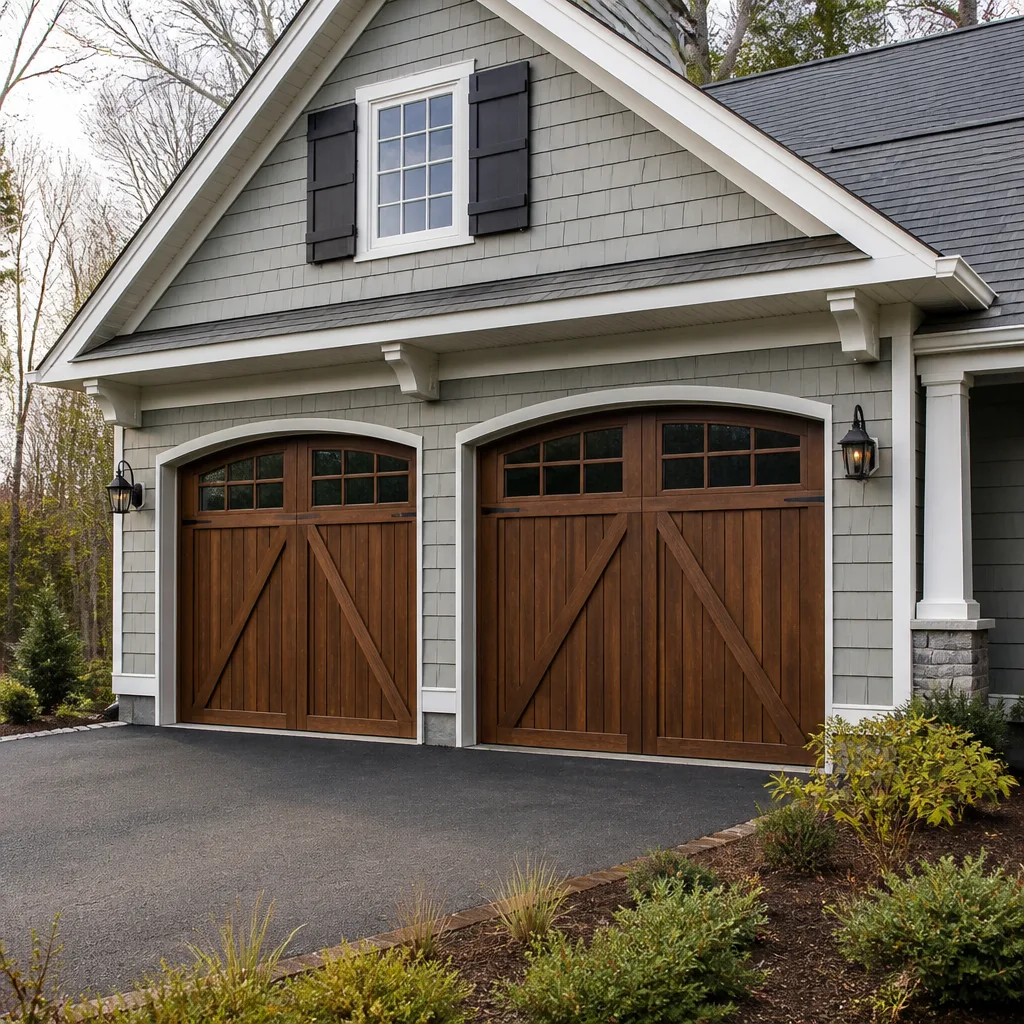 Carriage house
 Modern flush
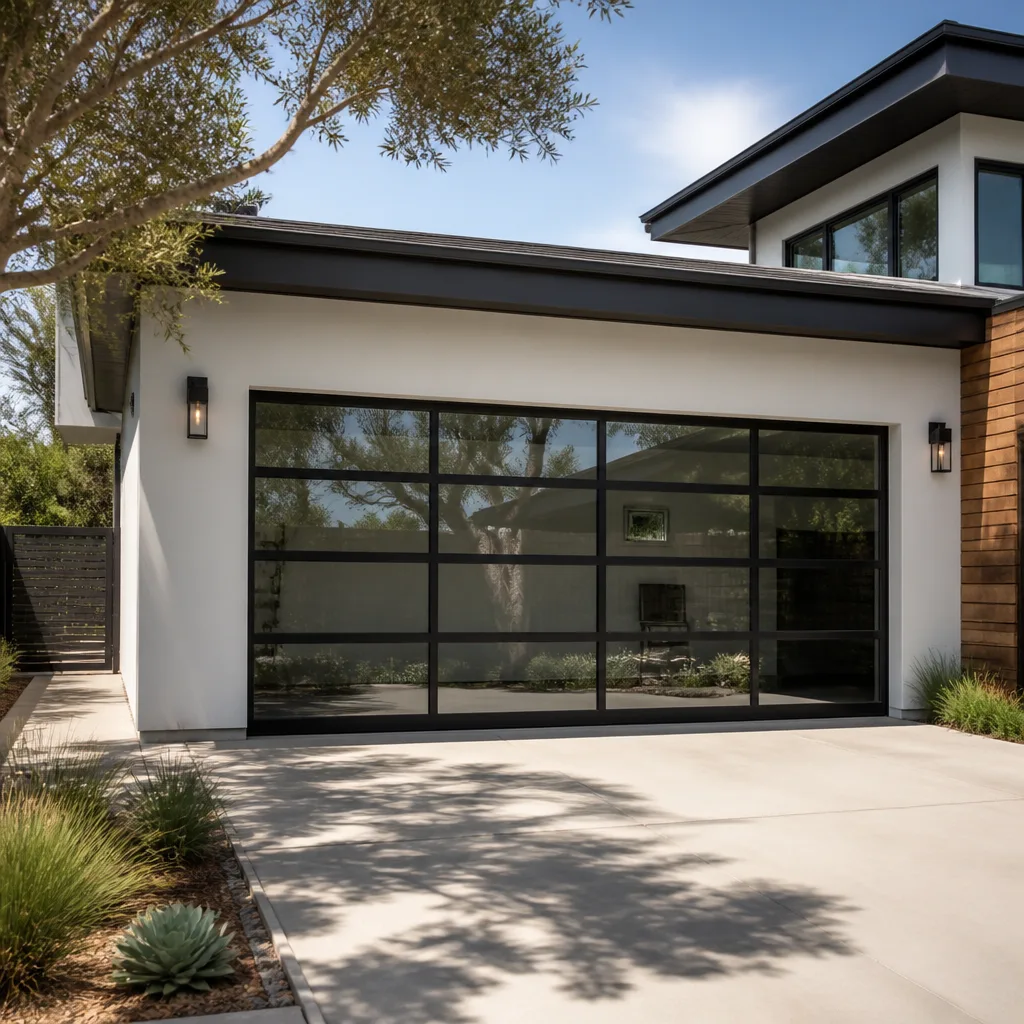 Full-view glass
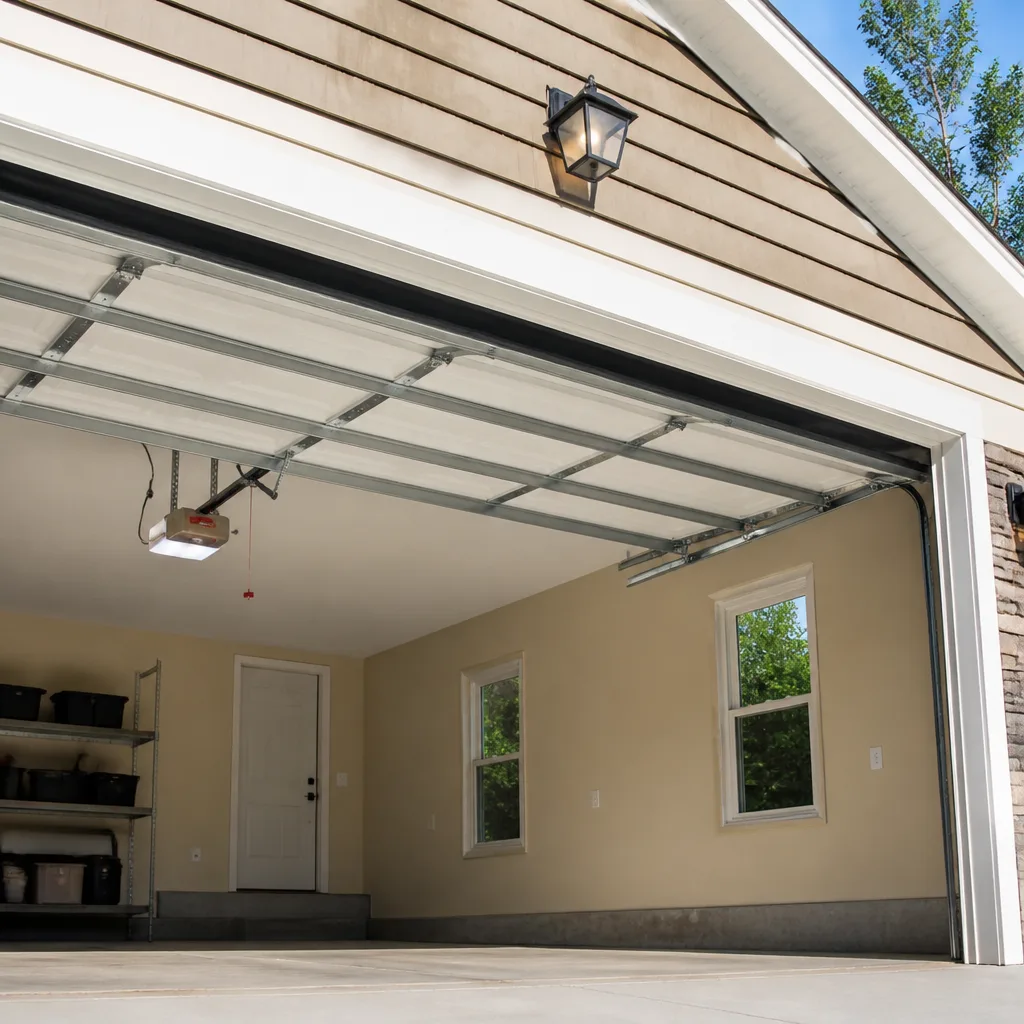 LiftMaster openers
 Chamberlain openers
Full 25-point door and opener safety check with every visit - springs, cables, rollers, tracks, and your LiftMaster or Chamberlain opener included
You get a price before we start. It does not change when the pro arrives.
Get your free estimateGarage Door Warning Signs: A Port Saint Lucie Homeowner’s Reference Guide
A garage door that hesitates for half a second before it moves isn’t “getting old.” It’s telling you the torsion spring is losing tension, and it may have a few hundred cycles left before it snaps. That’s a repair call, not a keep-an-eye-on-it situation. Most garage door failures give two to four weeks of warning, and the signs are specific once you know what you’re listening for and looking at. This guide is our translation key: the sounds, movements, and visual cues that point to one failing component instead of a vague sense that something’s wrong. We work on garage doors across Port Saint Lucie every week, and these are the signals that actually matter here.
Quick Answer
The main garage door warning signs are unusual sounds (grinding, squealing, popping, rattling), uneven or jerky movement, a door that won’t hold its position when you lift it partway, and opener problems like a motor that runs without moving the door or a remote that only works up close. In Port Saint Lucie’s heat and humidity, watch for rust on spring coils, mineral deposits on the bottom seal, and hairline cracks in panel corners. Two signs mean call a professional today: visible cable separation and a door that closes unevenly when you work it by hand.
Styles & brands we work with
- Raised-panel steel
- Carriage house
- Modern flush
- Full-view glass
- LiftMaster openers
- Chamberlain openers
Table of Contents
- What Do the Sounds Tell You? A Sound-to-Component Guide
- Visual Warning Signs Specific to Port Saint Lucie’s Climate
- Movement Warnings: Uneven Lift, Slow Reversal, and a Door That Won’t Hold
- Opener Behavior Flags: Motor Running but Door Not Moving
- The Two Signs That Are Always a Same-Day Call
- A Monthly Five-Minute Check You Can Do Safely
- Why Brand and Part Matter in Port Saint Lucie
What Do the Sounds Tell You? A Sound-to-Component Guide
Sound is the earliest warning a garage door gives, and different parts fail with different noises. Treating every squeak the same way wastes money, because a worn roller bearing is a cheap fix and a fatigued torsion spring is a precision repair. Here’s how we separate them.
- Grinding usually points to worn metal-on-metal contact: dry or worn roller bearings, a bent track section the rollers are scraping, or a torsion tube that’s lost its lubrication at the bearing plates. It tends to be constant through the whole travel.
- Squealing is high-pitched and often comes from the opener’s drive system, or from rollers whose bearings have dried out. If it starts the moment the motor engages, look at the opener first.
- Popping is the one that deserves your attention fast. A sharp pop or a bang during the open or close cycle often means a torsion spring is winding down and has partially released. Stop using the door and have it checked before running it again.
- Rattling is loose hardware: hinge bolts, a slightly loose bottom bracket, or a track that’s working free from its fasteners. It’s irritating but usually the least urgent of the four.
One note that matters more than any of the above: never put your hands near the springs, cables, or the brackets they anchor to while you’re listening for the source. Torsion and extension springs are under heavy tension, and a sudden release can cause serious injury. If the popping is coming from the spring area, that’s a stop-and-call moment, not a look-closer moment. Our Garage Door Repair Port Saint Lucie team handles spring work with the right tools and the door safely de-tensioned first.
Visual Warning Signs Specific to Port Saint Lucie’s Climate
Port Saint Lucie’s heat and humidity do specific things to a garage door that homeowners in drier climates never see. A visual check takes two minutes and catches problems before they become repairs.
- Rust blooms on the torsion spring coils. Look at the coil of spring above the door on the wall header. Small orange or brown patches on the coils mean moisture has been sitting on the steel. Rust changes how the spring flexes and can shorten its life. It also makes a cheap spring harder to identify later, so catching it early helps.
- White mineral deposits on the bottom seal track. That chalky white buildup along the aluminum track where the bottom seal rides is hard water and humidity doing their slow work. It can stiffen the seal and make it drag. Cleaning it off and keeping the track clear keeps the door closing evenly.
- Hairline cracks in panel corners. Heat cycling causes the panels to expand and contract. Small cracks at the corners where the panel meets the stile are the first sign of that stress. They’re usually cosmetic at first, but a crack that grows weakens the panel.
- Bowed or warped panels. Direct afternoon sun on a west-facing door can make a wood or metal-faced panel bow slightly over time. If the door looks less straight than it used to, note it.
Screens and soffit vents around a Port Saint Lucie garage also trap humidity, and that trapped moisture is part of why rust shows up on spring hardware here. A garage that gets good ventilation dries out better between rain events.
Movement Warnings: Uneven Lift, Slow Reversal, and a Door That Won’t Hold
How the door moves tells you as much as how it sounds. Three movement patterns cover most of the diagnostic ground, and each points to a different part.
- One side higher than the other during travel. If the left edge of the door lifts faster than the right, or one side lags through the whole cycle, that’s often a sign of unequal cable tension. A slack or stretching cable on one side lets that corner fall behind. It can also mean one torsion spring in a pair has weakened faster than its partner. Uneven travel that you ignore puts strain on the panels and the opener.
- Slow reversal response. A door that takes a moment longer than usual to reverse when something is in the way usually means the safety sensors are misaligned or dirty. Those small sensors at the bottom of the track on each side need a clear line of sight, and a spiderweb or a shifted bracket can throw them off.
- Door won’t hold its position. Lift the door about halfway by hand (with the opener disconnected) and let go. A balanced door should stay put. If it drops on its own, or slowly slides down, the torsion springs have lost their balance and are no longer carrying the door’s weight. That’s a spring issue, not a track issue.
Movement problems are where a general handyman often hits a wall, because diagnosing them means knowing how the spring, cable, and track systems relate. A specialist reads the same movement and knows which part is behind it before opening a tool bag. Our technicians have up to 9 years of experience reading exactly these patterns on Port Saint Lucie doors.
Opener Behavior Flags: Motor Running but Door Not Moving
Openers fail in ways that look like door problems. Here are the three opener behaviors that send homeowners to the phone, and what each usually means.
- Motor runs but the door doesn’t move. The motor hums or spins and the door stays put. On a chain or belt drive opener, the most common cause is a stripped drive gear inside the unit, or a broken chain or belt. The motor is fine; the connection between the motor and the door has failed. That’s an opener repair, not a door replacement.
- Remote only works close range. If you have to be right at the door for the remote to respond, the opener’s antenna is usually to blame, or the logic board’s receiver has weakened. Sometimes a new remote battery fixes it. When it doesn’t, the fix lives inside the opener.
- Door reverses before it fully closes. Two different things cause this, and they sound the same to a homeowner. Safety sensor obstruction is one. The close-limit setting on the opener is the other. A sensor that sees an obstacle will reverse the door every time; a close-limit set too high reverses it at the same point each cycle.
Openers are where brand familiarity earns its keep. We work across LiftMaster, Chamberlain, Genie, and Craftsman openers, including connectivity and app-integration troubleshooting, not just mechanical fixes. If your smart opener has dropped off the app, that’s a different diagnosis than a door that won’t close, and it needs someone who knows the logic board. For that kind of work, call on our garage door opener repair team.
The Two Signs That Are Always a Same-Day Call
Most warning signs give you time to plan. Two don’t. If you see either of these, treat it as a today problem and don’t run the door again.
- Visible cable separation. Look at the cables that run along the sides of the door. If you can see frayed strands, a cable pulling away from its drum, or a cable that’s come off the drum on one side, stop. A cable under tension can whip when it fails, and the door can drop. This is the single most dangerous condition on a residential garage door. Don’t try to reattach it yourself.
- A door that closes unevenly under manual operation. Disconnect the opener and lower the door by hand. If one side hits the floor before the other, or the door racks and binds in the tracks, the balance is gone or a cable is slacking. That door is close to failing and could come down hard on whoever’s under it.
Any spring pop you hear, any door that slams rather than settles, and any time you see the door hanging at an angle all fall into the same category. We answer 24/7. Fast dispatch from 7am to 7pm, Sunday through Friday, so a Port Saint Lucie door that fails gets attended to without a multi-day wait. If a call comes in outside dispatch hours, it’s booked into the next opening.
A Monthly Five-Minute Check You Can Do Safely
You can catch most of these warning signs yourself without touching a spring or a cable. Here’s the routine we suggest for Port Saint Lucie homeowners, done once a month.
- Stand back and watch the full open and close cycle. Note any hesitation, uneven lift, or sound that wasn’t there last month.
- Look at the spring coils above the door for rust blooms or gaps you can see with the door down. Don’t reach up and touch them.
- Check the bottom seal track for mineral buildup and the seal itself for stiffness or tears.
- Look at the panel corners for hairline cracks, and at the door as a whole for bowing or sagging.
- With the door closed, wipe the safety sensors at the bottom of each track with a soft cloth and check they’re pointed at each other.
- Test the safety reverse by placing a roll of paper towels in the door’s path and closing it. The door should reverse on contact. If it doesn’t, stop and call.
- Listen to the opener during the cycle. A grinding or squealing sound from the unit itself is an opener signal, not a door signal.
That’s the whole list. Anything you find that points to springs, cables, or a door that won’t balance is a professional’s job. Everything else you can note and hand to us when you call.
Why Brand and Part Matter in Port Saint Lucie
When a warning sign turns into a repair, the part you get matters as much as the diagnosis. A door that’s been running on a worn-out spring needs a spring matched to the door’s weight and cycle count, not whatever’s closest on a shelf. A roller that’s been grinding needs the right bearing, and an opener that’s stripped a gear needs a gear made for that opener.
We work across eight brands, including Clopay, Amarr, and Wayne Dalton doors, and LiftMaster, Chamberlain, Genie, and Craftsman openers. That range means the right part, the first time, more often than not, and it means we’re not stuck telling you a door has to be replaced because nobody stocks the part. We source and supply parts for all of those brands as a core service, so the repair doesn’t stall waiting on an order. Single source from diagnosis to part to install means one call, fully resolved, with no runaround to a second company.
When a warning sign has gone too far and the door needs a full replacement, our garage door installation team measures the opening, matches the door to your home, and schedules the work around your week.
Common Mistakes to Avoid
- Treating every sound the same. A squeal and a pop are two different problems. Calling them both “a noise” means the wrong part gets replaced, or the right one gets missed. Match the sound to the component first.
- Ignoring the rust on spring coils. Port Saint Lucie humidity makes rust on spring hardware common. A rusty spring still has to carry the door’s weight, and rust weakens it. Don’t wait for the pop.
- Tightening or adjusting springs yourself. This is the number one garage door injury. Torsion springs are under heavy tension and the wrong tool or the wrong turn can release that tension in an instant. Leave the springs to a trained technician.
- Assuming a reversing door means a bad sensor. It could be the close-limit setting on the opener. Testing the sensor first saves a second visit.
- Washing the door and soaking the tracks. Spraying the door with a hose and letting water run into the track and onto the spring hardware invites the rust and mineral buildup that cause trouble here. Wipe the door down instead.
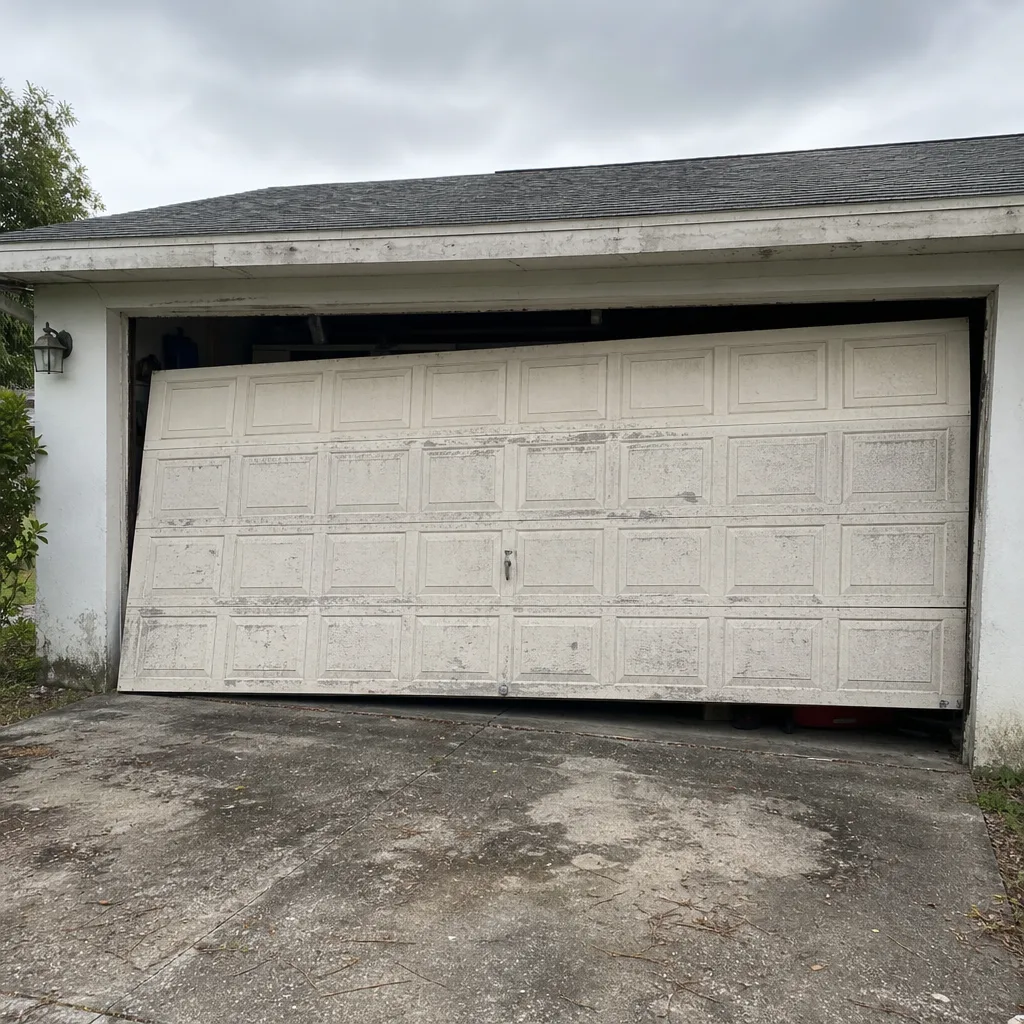
- Running a door that’s hanging at an angle. A door that’s uneven has lost its cable tension balance. Every cycle you run it puts more strain on the panels and the opener and moves it closer to failing.
- Calling a general handyman for spring or cable work. These are the two most dangerous jobs on a garage door, and they need the right tools and knowledge. A specialist isn’t a luxury here; it’s the safe choice.
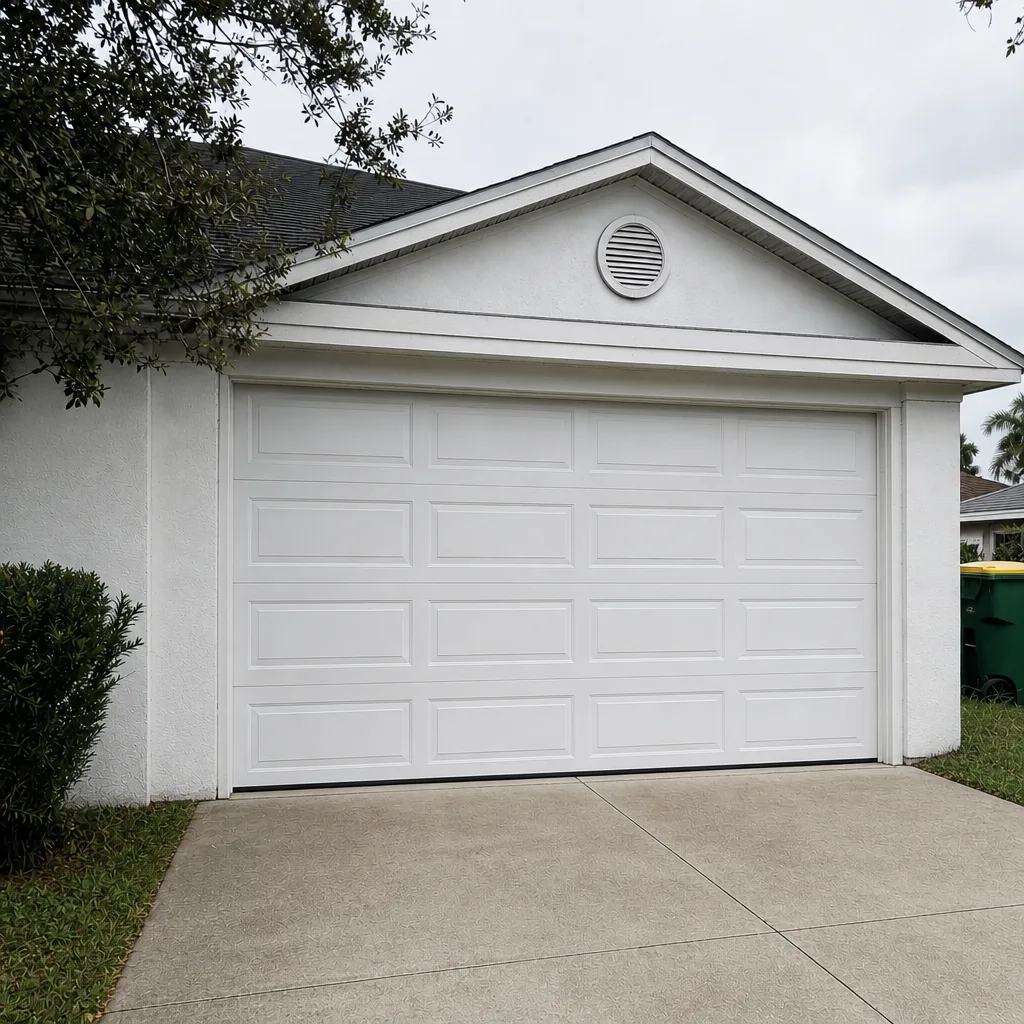
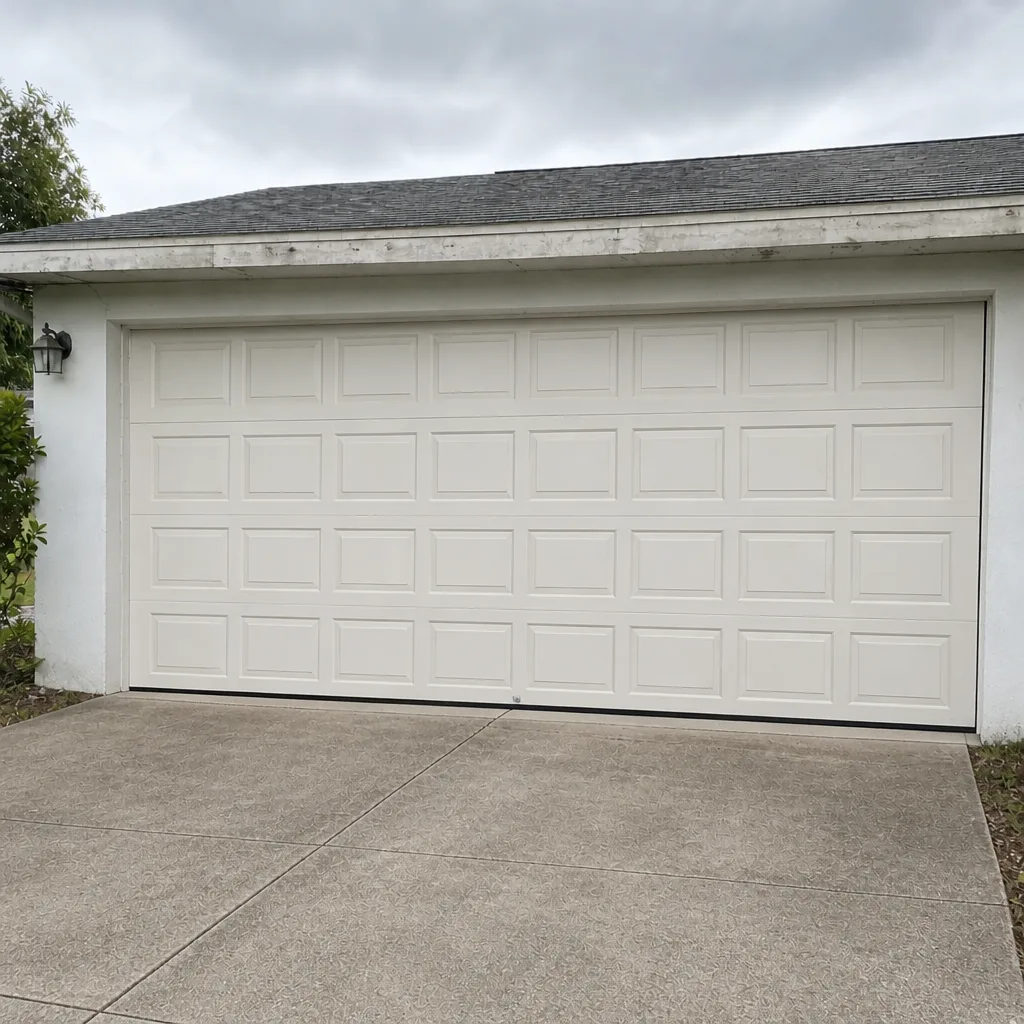
See the difference
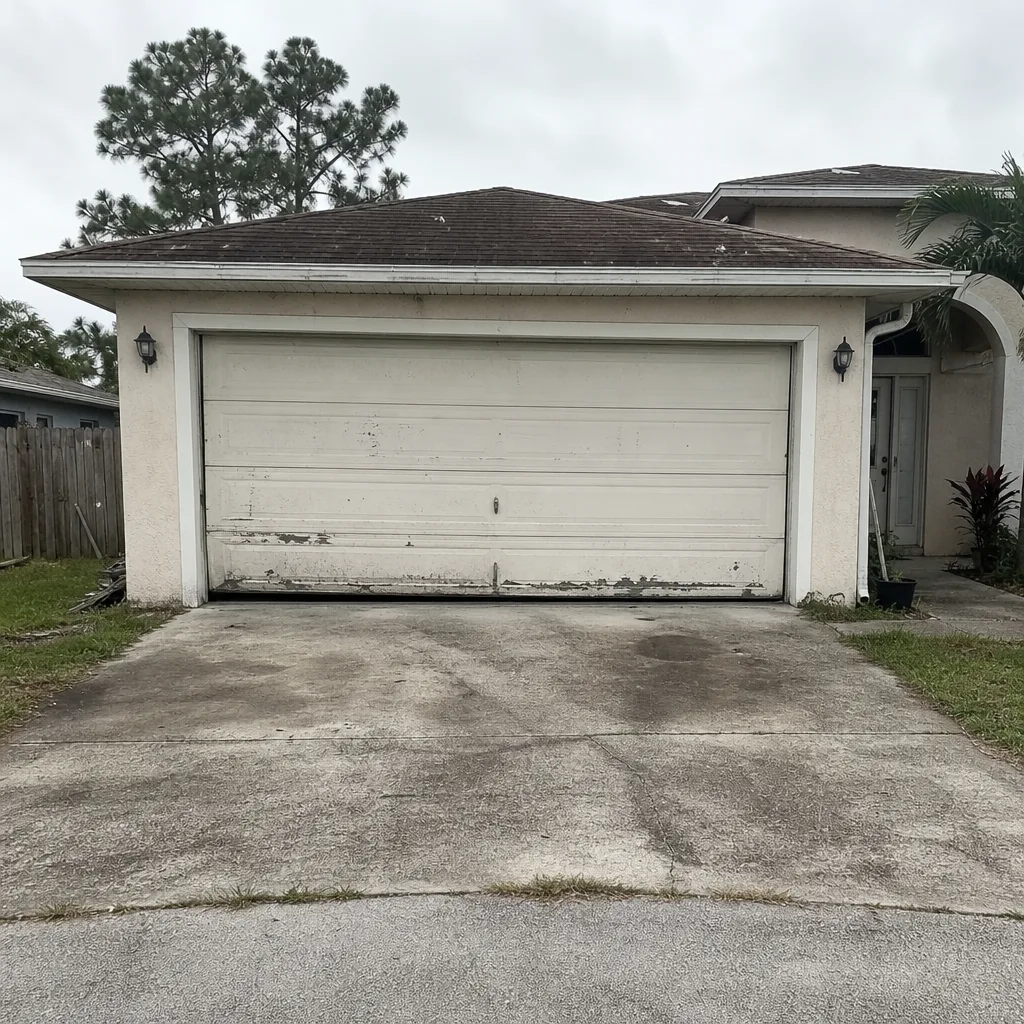 Before
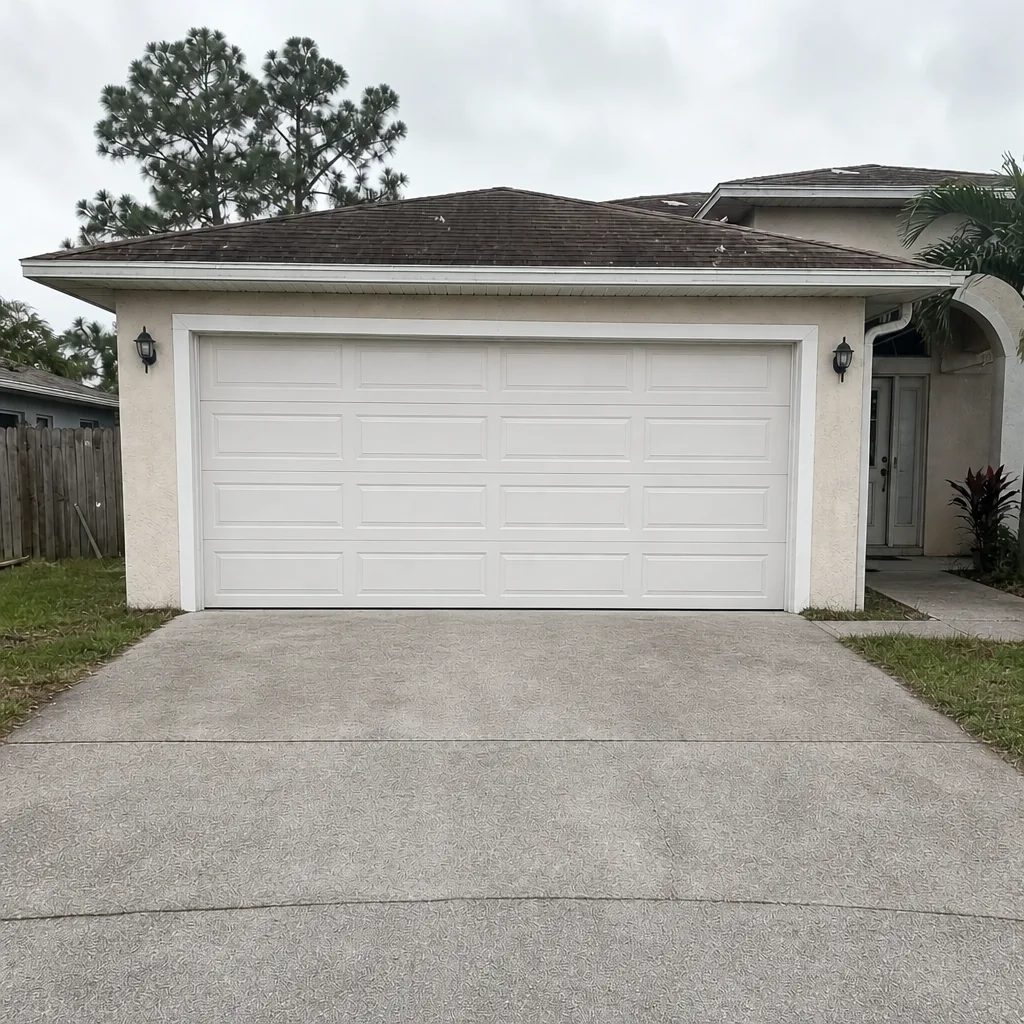 After
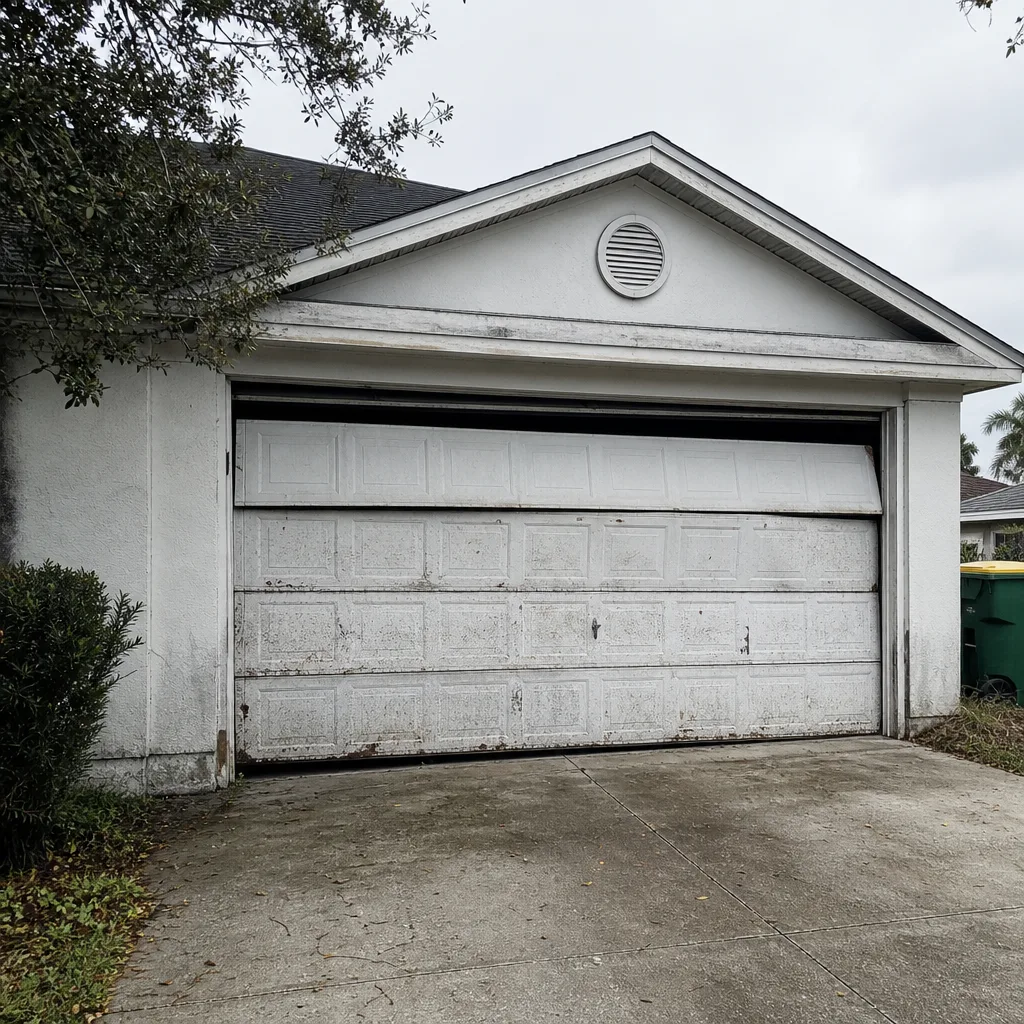 Before
 After
 Before
 After
When to Call a Professional
Call a professional for anything involving the springs, cables, or the door’s balance, and for any sign you’re not sure how to read. Specifically: a pop or bang from the spring area, visible cable separation or fraying, a door that closes unevenly, a door that won’t hold its position, an opener that runs without moving the door, or a door that reverses every time it closes. Those are all jobs where a wrong fix makes it worse. Garage Door Repair Port Saint Lucie offers free estimates in Port Saint Lucie. Call (877) 713-8285. We answer 24/7, with fast dispatch from 7am to 7pm, Sunday through Friday. The price is quoted and agreed before any work starts.
Frequently Asked Questions
Most garage door repairs in Port Saint Lucie run from about $120 to $450 depending on the part, with spring repair and opener work at the higher end of that range and hardware fixes lower. The written estimate sets the exact price per job. Call (877) 713-8285 for an exact quote – estimates are free.
The most common early warning is a change in sound, usually a squeal or grind that wasn’t there before, because worn rollers and dry bearings announce themselves long before they fail. Catching it there means a small repair instead of a bigger one. Call (877) 713-8285 to talk through what you’re hearing.
Yes for true repair and emergency situations like cable separation, a popped spring, or a door that won’t close, because those can block your car in the garage or leave the house exposed. We answer 24/7, with fast dispatch from 7am to 7pm, Sunday through Friday. Call (877) 713-8285.
No. The written estimate is the price, and any repair is quoted and agreed before any work starts. If we find something else while we’re there, we’ll show you and give you a separate estimate for that, not add it to the bill. Call (877) 713-8285 to schedule.
Your door likely reverses either because the safety sensors at the bottom of the track are misaligned or dirty, or because the close-limit setting on the opener needs adjusting. Start by wiping the sensors and checking they line up. If it still reverses, that’s an opener fix. Call (877) 713-8285 and our garage door repair team will sort it out.
The local pro connected through us is licensed and insured as Florida requires, and we confirm that before any job begins. Every technician works on one trade only, and our technicians have up to 9 years of experience. Call (877) 713-8285 for a free estimate.
The Bottom Line
Most garage door failures give you two to four weeks of warning, and the signs are specific once you know what you’re looking at. Match the sound to the component: popping means the spring, grinding means bearings or tracks, squealing often means the opener, rattling means loose hardware. Watch for the Port Saint Lucie climate signs: rust on spring coils, mineral buildup on the seal track, and hairline cracks in panel corners. Treat any cable separation or uneven manual close as a same-day call. Catch the warning early and a small repair stays small. Call (877) 713-8285 for a free estimate. We answer 24/7, with fast dispatch from 7am to 7pm, Sunday through Friday.
Written by the team at Garage Door Repair Port Saint Lucie.