
Last updated November 21, 2026
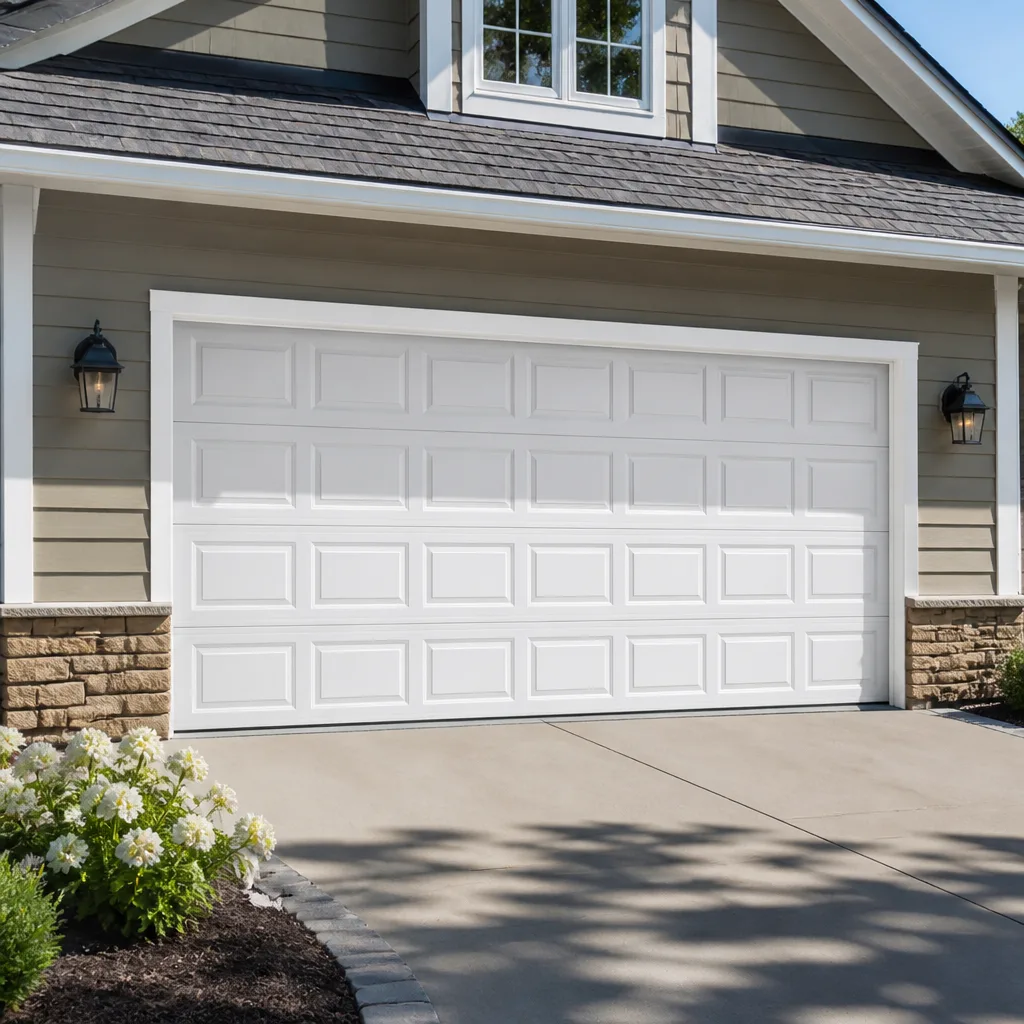 Raised-panel steel
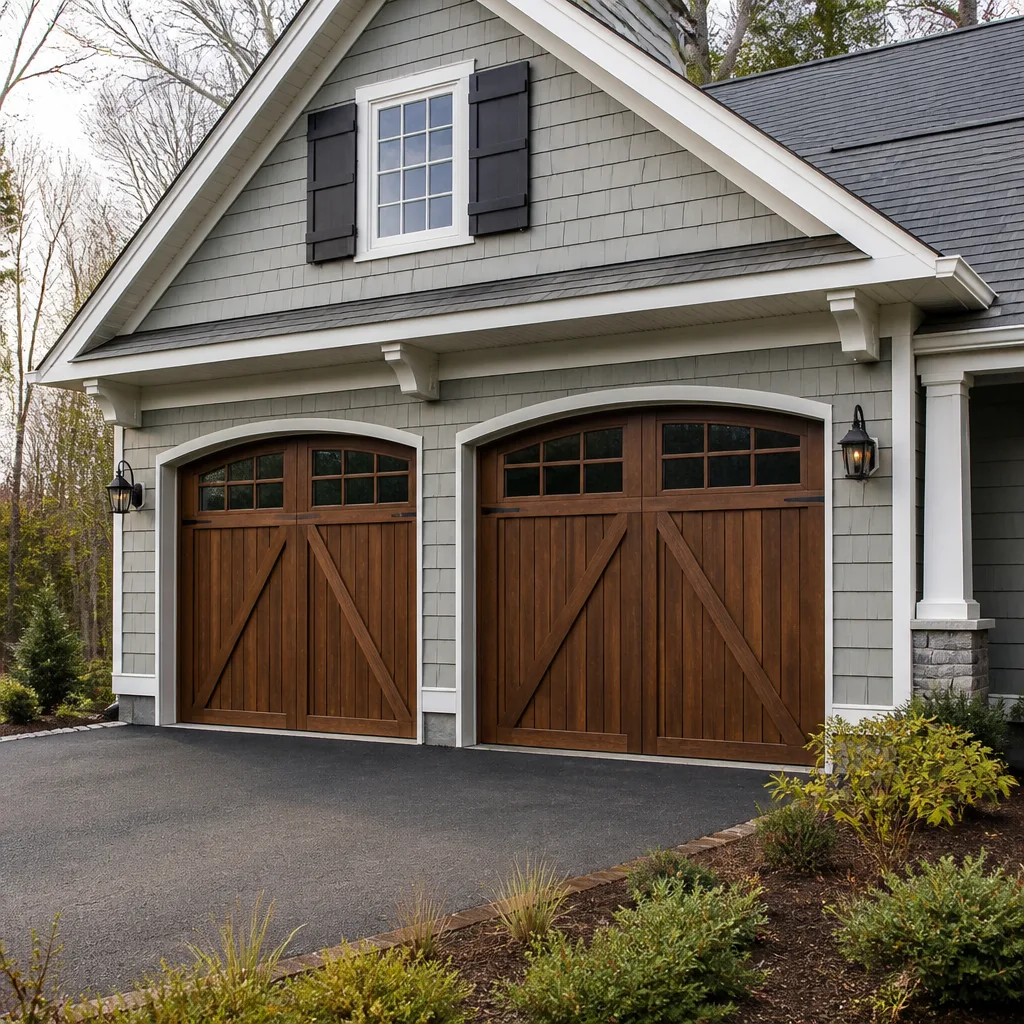 Carriage house
 Modern flush
 Full-view glass
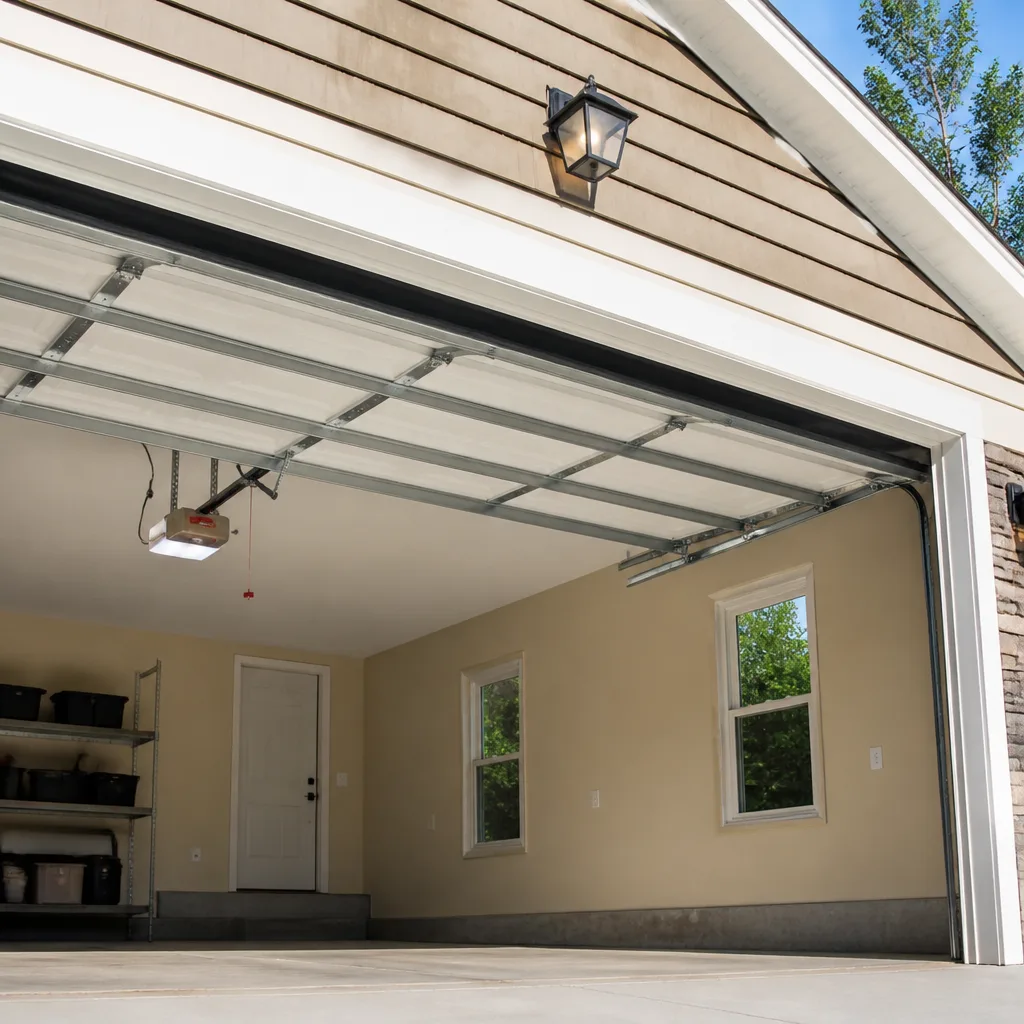 LiftMaster openers
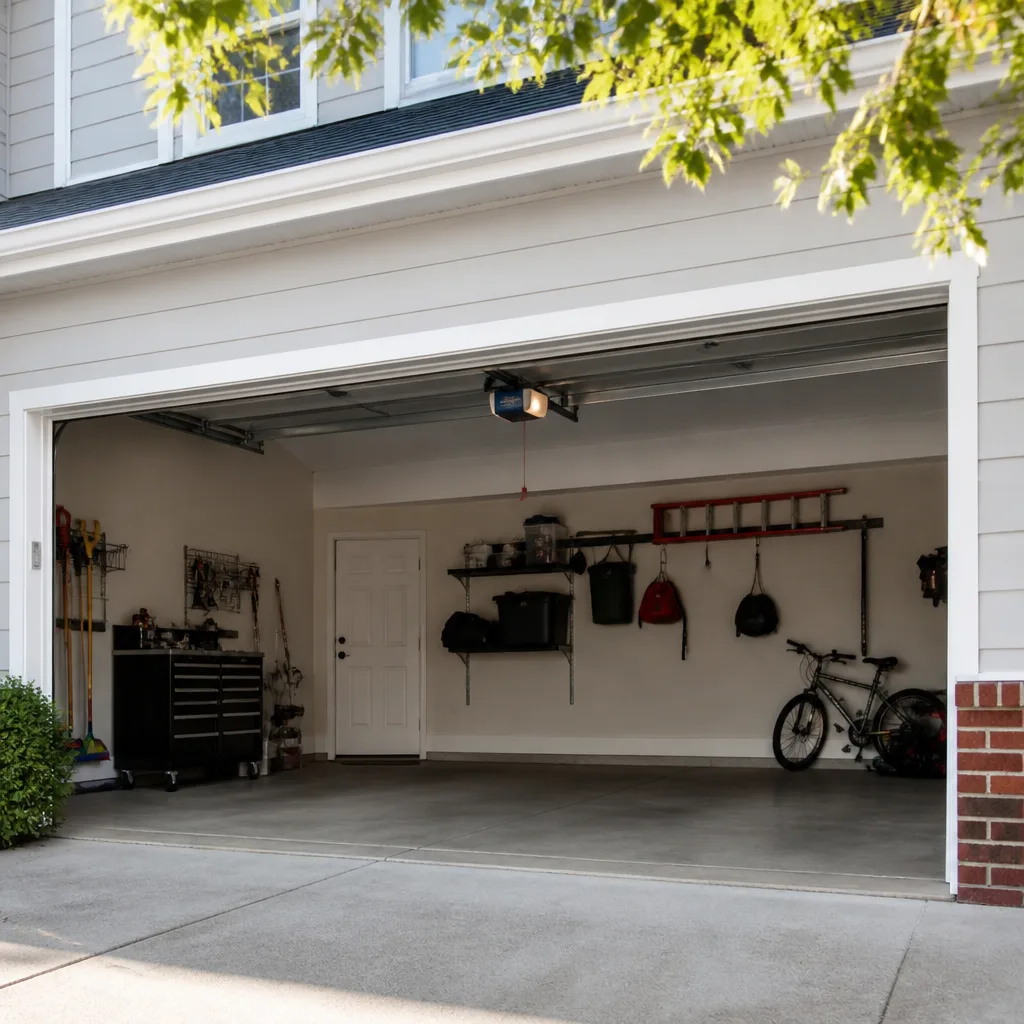 Chamberlain openers
Full 25-point door and opener safety check with every visit - springs, cables, rollers, tracks, and your LiftMaster or Chamberlain opener included
You get a price before we start. It does not change when the pro arrives.
Get your free estimateGarage Door Permits, Codes & Inspections in Port Saint Lucie, FL: What You Need to Know
If a contractor tells you a full garage door replacement in Port Saint Lucie doesn’t need a permit, that’s wrong. And the trap is quiet: if you sell your home and the door was swapped without one, that unpermitted work becomes your problem at closing, not the contractor’s. The line between “repair” and “installation” is more specific than most homeowners are told, and St. Lucie County cares about it. In this guide we’ll walk you through the Florida Building Code wind-load rules that apply here, the exact thresholds where a spring, cable or opener fix stays permit-free but a panel swap or full door change does not, what a garage door inspection actually looks at, and how HOA approvals in Port Saint Lucie work alongside the county’s process.
Quick Answer
A full garage door replacement in Port Saint Lucie requires a permit through the St. Lucie County Building Division, and the door must carry a wind-load rating that meets Florida Building Code Section 1609 requirements for this area. A repair – spring, cable, roller, or opener – generally does not trigger a permit. Panel replacements sit in a gray zone and depend on scope, so confirm with the Building Division before work starts. When in doubt, ask the county directly; the answer is free and it protects your home sale.
Styles & brands we work with
- Raised-panel steel
- Carriage house
- Modern flush
- Full-view glass
- LiftMaster openers
- Chamberlain openers
Table of Contents
- What Does the Florida Building Code Say About Garage Doors in Port Saint Lucie?
- When Does a Garage Door Job Need a Permit – and When Doesn’t It?
- What “Wind-Rated Door” Actually Means on a Permit Application
- What a Garage Door Inspection in Port Saint Lucie Actually Checks
- How HOA Architectural Approval Works Alongside County Permits
- What Happens If You Skip a Required Permit?
- How the Permit and Installation Process Works, Step by Step
- How to Choose a Garage Door Contractor for a Permitted Job
What Does the Florida Building Code Say About Garage Doors in Port Saint Lucie?
Florida regulates garage doors through wind-load requirements, and St. Lucie County enforces those requirements through its building department. The section that governs is Florida Building Code Section 1609, which sets the design wind pressures a building component must withstand. A garage door is one of the largest, lightest, most wind-exposed components on a home, which is why it’s treated as a structural opening rather than a cosmetic feature. The door, the tracks, and every anchor point have to be rated for the pressure the code assigns to that location.
For a Port Saint Lucie homeowner, the practical takeaway is this: the wind rating isn’t the door’s marketing claim. It’s a documented assembly spec that must match what the code requires for the address. That’s why the county asks for product approval documentation when a permit application is submitted – the door has to be certified for the area’s wind zone, and the installer must anchor it according to the manufacturer’s instructions for that specific rating.
Three things follow from this that are worth holding onto:
- Not every “hurricane-rated” door is rated for every location. Wind ratings are pressure-specific. A door rated for a lower pressure may not qualify for a site that demands more.
- The rating lives on the door, not the brochure. Approved doors carry a label or permanent marking that an inspector will look for.
- Installer technique matters. A properly rated door installed with the wrong anchors or the wrong spacing fails the intent of the code even if the product is certified.
St. Lucie County’s Building Division is the authority here, and their website and counter staff are the definitive source for your specific address. When a homeowner asks us whether a particular door qualifies, we point them to the product approval documentation and the county’s requirements rather than guessing. If you want to understand what a code-compliant installation looks like in practice, our garage door installation page walks through how we match the door spec to the site.
When Does a Garage Door Job Need a Permit – and When Doesn’t It?
Here’s the distinction most contractors blur, and it matters. Repair work that returns the door to its existing, already-permitted condition typically does not require a new permit. Work that changes the door, its size, its structural attachments, or its wind-rating spec typically does. The St. Lucie County Building Division draws that line based on the scope of the job, not on how the invoice is worded.
Jobs that generally do not need a permit
- Spring replacement. A torsion or extension spring swap restores function without changing the door assembly. This is the highest-risk repair in the trade because of spring tension, but it isn’t a permitted structural change. If you’re watching for spring symptoms, our garage door repair page covers the warning signs.
- Cable, roller, hinge, and track hardware replacement. Same principle: restoration of existing function on the existing door.
- Opener repair or opener replacement. An opener is not part of the building envelope’s wind rating. Swapping a LiftMaster or Genie unit doesn’t trigger a building permit in most cases. Opener troubleshooting is covered on our garage door opener repair page.
- Routine service and adjustment. Balancing, lubrication, safety-reversal testing, sensor alignment.
Jobs that generally do require a permit
- Full door replacement. A new door is a new structural opening component. It needs a permit, and the door needs to meet the current wind-load requirement for the site.
- Panel replacement – gray zone. Replacing a single damaged bottom section is often treated as a repair; replacing multiple sections or a section that affects the assembly’s rated condition can push the job into permitted territory. Confirm with the Building Division before ordering panels. Our guide to garage door panel replacement covers how we assess this with homeowners.
- Changing door size or adding a new opening. This changes the wall structure and always needs a permit.
- Replacing a non-rated door with a rated one. A benefit, yes – still a permit.
- Any work that changes the door’s engineered attachment to the structure.
When we quote a replacement job, we tell the homeowner which category it falls in before the contract is signed. If your job falls in the gray zone, we’d rather you hear the county’s answer from the county than take our read on it. Our main Garage Door Repair Port Saint Lucie page is a good starting point if you’re not sure what type of work you need yet.
What “Wind-Rated Door” Actually Means on a Permit Application
On a permit application, “wind-rated” is a documented specification, not a checkbox. The Building Division wants to see that the specific door model and the anchoring system have been evaluated for the design pressure at your address, and it wants that evaluation traceable back to the manufacturer’s product approval. A sales brochure saying “hurricane-rated” or “storm-ready” doesn’t accomplish that. The manufacturer’s approval documents do.
What the county typically needs to see in the submission:
- The specific model number of the door being installed, not the product family or brand tier.
- Product approval documentation showing the assembly’s wind-pressure rating for the design pressure of the site.
- Installation instructions for that rating, which specify anchor type, spacing, and attachment to the jamb.
- The permit application naming the contractor and property owner, with the scope of work.
Here’s where brand knowledge matters. A door that’s approved in one configuration with one anchoring system may not be approved in a different configuration at the same site. Clopay, Amarr, Wayne Dalton, and the other manufacturers we work with publish model-specific approval documents, and the model number on the door has to match the model number on the paperwork. When the paperwork and the door don’t line up, an inspection will flag it, and the homeowner ends up paying for a re-inspection.
What you can do as a homeowner:
- Ask the contractor for the specific model number and the product approval document for your address before you sign.
- Make sure the permit application lists that model, not a generic “hurricane-rated door.”
- Confirm the door you receive on installation day carries the label matching the approval.
- Keep a copy of the approval document with your home records. It becomes part of your disclosure package if you sell.
In our experience, the single most common permit snag is a door that was ordered to a spec that doesn’t match the approval document – usually because someone substituted a similar model mid-project. When we specify a door for Port Saint Lucie, we start from the approval documents and work backward to the door.
What a Garage Door Inspection in Port Saint Lucie Actually Checks
Homeowners often assume the inspection is a paperwork review. It isn’t. A garage door inspection is a physical inspection of the installed door and the opener, and the inspector is looking for what actually holds the assembly together under wind load. The permit process requires an installation inspection, and it usually requires a final inspection once everything is complete.
What the inspector is typically looking at:
- The wind-rating label. The door should carry a permanent marking matching the model and rating on the approved permit application.
- Hardware attachment. Anchors into the jamb, bolts torqued and engaged, bracket spacing matching the manufacturer’s instructions for the wind rating. Loose anchors are the most common fail.
- Track and roller condition. Tracks straight and secure, rollers seated correctly, no obvious deviation that would affect performance under pressure.
- Opener safety reversal. The auto-reverse function tested against an obstruction, plus the photo-eye safety sensors functioning. This is a life-safety check, and it’s a required part of the opener’s certification.
- Weather seal and bottom seal. Adequate contact with the floor, since a gap undermines the rated performance of the door.
If a door is installed correctly, the inspection is quick. If it isn’t, the fail falls back to the contractor to correct and re-submit. What the homeowner should know is that a re-inspection fee is the contractor’s responsibility if the failure is installation error, but it’s a cost the homeowner carries if they self-arranged the door separately from the installation. That’s one reason we handle door sourcing and installation together – it keeps the responsibility in one place.
Want to know how a proper installation looks from the inside? That’s covered on our garage door installation page. The inspection isn’t a burden if the work was built for it from the start.
How HOA Architectural Approval Works Alongside County Permits
This is the piece that surprises people most. A county permit and an HOA architectural approval are two entirely separate processes. You may need both. Getting the county permit does not satisfy the HOA, and getting the HOA approval does not satisfy the county. They can run in parallel, which is a lot easier on the timeline than running them in sequence.
What the HOA typically reviews
- Appearance. Door style, panel design, finish color, and whether the door matches the community’s architectural standards.
- Style consistency. Some Port Saint Lucie communities have uniform door styles; others allow a range.
- Window and glazing choices. Window layouts are sometimes restricted.
- Submission packages. Most HOAs require a completed architectural request form plus a manufacturer spec sheet or brochure.
What the HOA does not review
- Wind-load rating. That’s the Building Division’s job.
- Structural attachment. Also the county’s job.
- Whether the installer is qualified. Your responsibility.
The practical advice: submit the HOA request at the same time the permit application goes in. If the HOA rejects a specific style after the door is ordered, you can end up with a delay that costs you a restocking fee or a re-order. That’s why we ask homeowners to confirm HOA approval in writing before anyone orders materials. We can help with the spec sheet and product photo the HOA typically wants.
What Happens If You Skip a Required Permit?
The short answer: it doesn’t go away, and it’s the homeowner who inherits the problem, not the contractor. The permit is tied to the property, so an unpermitted door follows the house when it’s sold. That’s the reason this deserves attention even if your door was replaced years ago.
The consequences to be aware of:
- It surfaces at the home sale inspection. A buyer’s inspector or the buyer’s closing agent will find an unpermitted garage door replacement. The closing can be delayed or the buyer can require remediation before proceeding.
- Remediation is sometimes a full re-permit. If the door is already installed, the county may require the current condition to be documented and permitted retroactively, with product approval docs and an inspection, and the installation may need correction if the door doesn’t meet the rating your address requires.
- Insurance after storm damage can be affected. If a claim involves the garage door and the insurer discovers the door wasn’t permitted or doesn’t meet the code rating for the address, the claim can be contested. That’s the scenario worth planning around, not the scenario you want to discover after a storm.
- The cost to fix it usually exceeds the original permit fee. Retroactive permitting, re-inspection, and possible door correction add up to more than the original permit would have cost to begin with.
None of this is meant to alarm a homeowner who did the right thing. It’s meant to close the gap for readers who are getting a quote right now and hearing that permits are “a hassle” or “probably not necessary.” In our experience, contractors who skip permits on garage door replacements are skipping them for their own convenience, not yours.
How the Permit and Installation Process Works, Step by Step
The sequence below is how a compliant garage door replacement typically flows in Port Saint Lucie. Individual cases and HOA timelines add days here or there, but the order stays the same.
- Site assessment and door selection. Measure the opening, confirm the design pressure applicable to the address with the Building Division, and select a door whose product approval covers that pressure in the configuration you want.
- HOA architectural request. Submit the door spec, photo, and architectural form to the HOA at the same time as your permit application.
- Permit application. Submit the completed application with the specific door model number and product approval documentation to the St. Lucie County Building Division.
- Permit issuance. The Building Division reviews and issues the permit. Timeline varies with their workload.
- Order the door. Only after permit issuance and HOA approval – not before – to avoid restocking fees if something changes.
- Installation. The door, tracks, and hardware are installed according to the manufacturer’s instructions for the approved wind rating. Anchor type and spacing must match the spec.
- Inspection. The county inspects the installation and confirms the label, hardware attachment, and opener safety reversal.
- Final inspection and closeout. With the installation approved, the permit closes, and you’ll want a copy of the inspection record for your home file.
If you’re at step one and want to understand what the process looks like from our side of the work, our garage door installation page is a good companion. If you’re dealing with a broken spring and can’t drive out of the garage, permits aren’t the conversation yet – that’s a repair, and our garage door repair team can help you understand the safety side of the fix.
How to Choose a Garage Door Contractor for a Permitted Job
The contractor you choose carries the permit responsibility on most of the work we’re describing. That’s why a few questions up front save a lot of trouble after installation. Below is what we’d ask if we were the homeowner.
Questions worth asking before you sign:
- Will you pull the permit, or will I? Confirm in writing who is the applicant and who pays the permit fee.
- Can you give me the specific model number and product approval document for this door at my address before I sign?
- What happens if the inspection fails – is your company responsible for the correction and the re-inspection?
- Have you installed this specific door model, and are you familiar with its installation instructions for our wind zone?
- Are you working on my brand specifically? LiftMaster, Chamberlain, Genie, and Craftsman openers all have their own safety-reversal testing procedures, and Clopay, Amarr, Wayne Dalton, and Raynor each publish their own anchoring instructions. A contractor who works across these brands handles the spec instead of substituting what’s easiest to order.
One more point worth making: a garage door specialist is not a general handyman or a multi-trade contractor. Spring work is high-tension and genuinely dangerous; opener safety reversal is a life-safety system; and permit-approved wind anchoring is a structural spec. Our technicians have up to 9 years of experience on garage doors as their only trade, which is a deliberately narrow focus. We stock and source parts for the eight brands we work on, and we approach every job as one call fully resolved rather than a referral to a second company.
If you’re in Port Saint Lucie and want a second opinion on a quote that felt vague about permits or door model numbers, we’re glad to take a look. If you’d rather read up on what a permitted installation actually involves, our garage door installation page is the place to start, and if the door itself is struggling to open or close, our garage door opener repair page covers the diagnostic side.
Common Mistakes to Avoid
- Assuming the contractor handled the permit. Ask who the applicant is and get it in writing. In St. Lucie County, the permit is tied to the property, so the homeowner inherits the problem if it wasn’t pulled.
- Ordering the door before the permit is issued. If the Building Division requires a different door spec than what was ordered, the homeowner is paying for the swap. Sequence matters.
- Confusing the HOA approval with the county permit. They’re separate processes with separate requirements. Both are typically needed for a replacement in a Port Saint Lucie community with architectural review.
- Accepting “hurricane-rated” without a model number. A brochure isn’t product approval documentation. Ask for the approval document for your address, and make sure the model on the paperwork matches the model delivered.
- Replacing multiple panels under the heading of “repair.” A single bottom section is usually a repair. A multi-section swap can be treated as an installation and needs a permit. Confirm with the Building Division before work starts.
- Doing a permit-free full replacement. It follows the house at sale. Unpermitted door work becomes the buyer’s problem to negotiate, and yours to disclose.
- Skipping the safety-reversal test after an opener work. The inspection will check it, and more importantly, an improperly set auto-reverse is a life-safety issue for kids and pets. The opener spec for your brand and model determines the test method.
See the difference
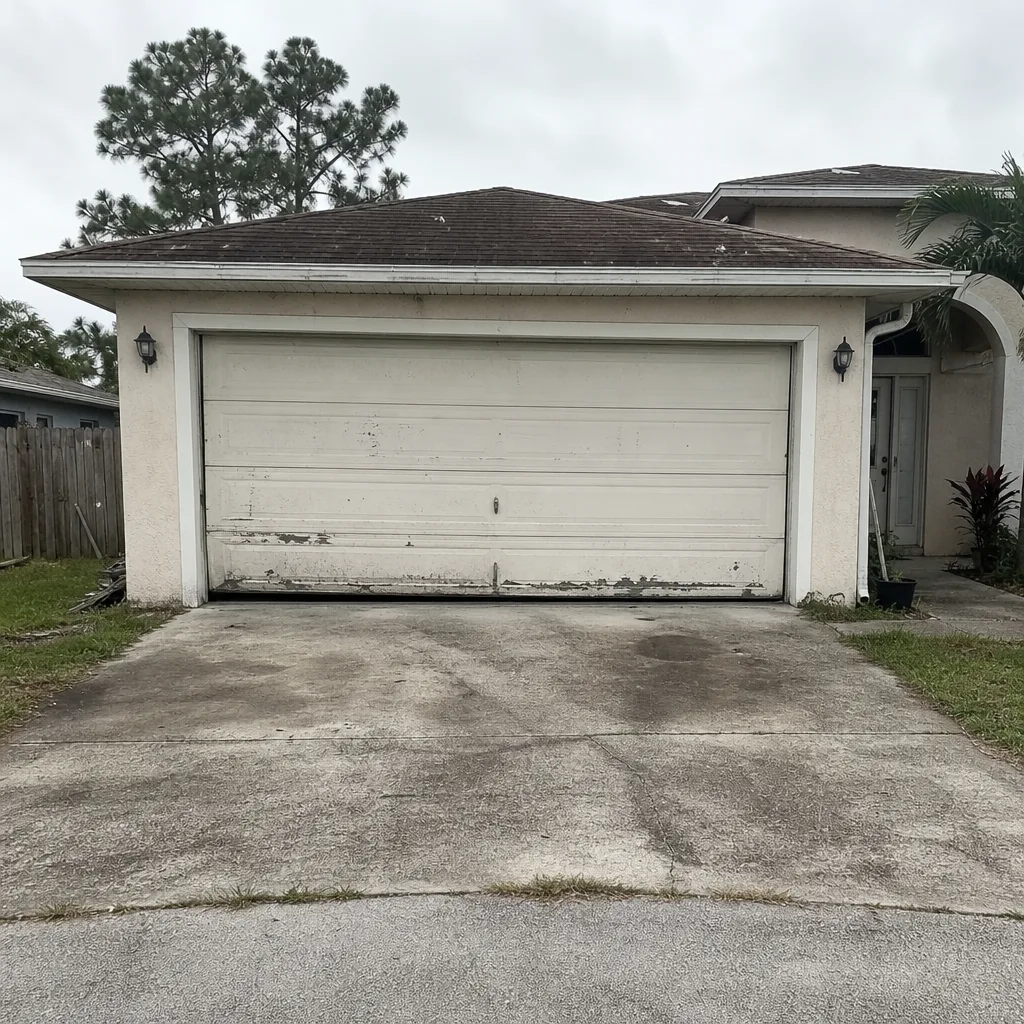 Before
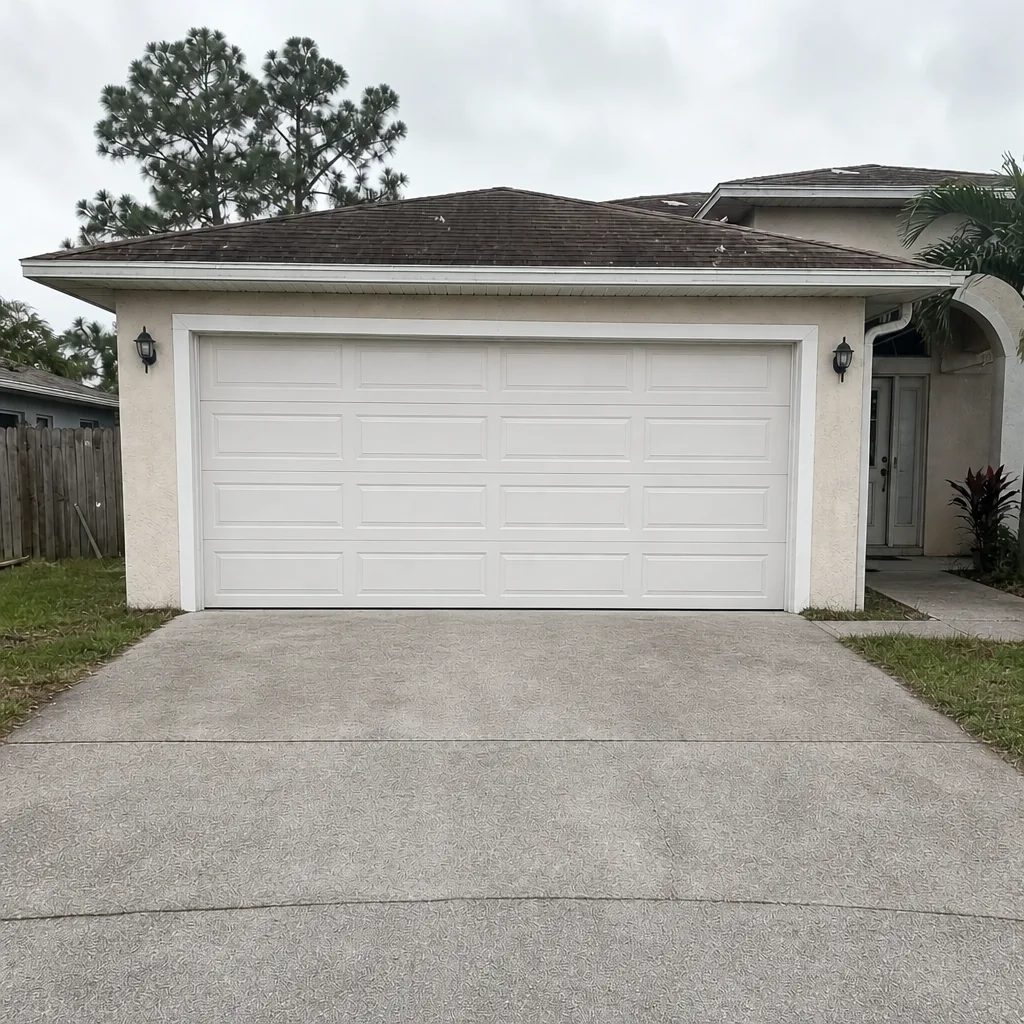 After
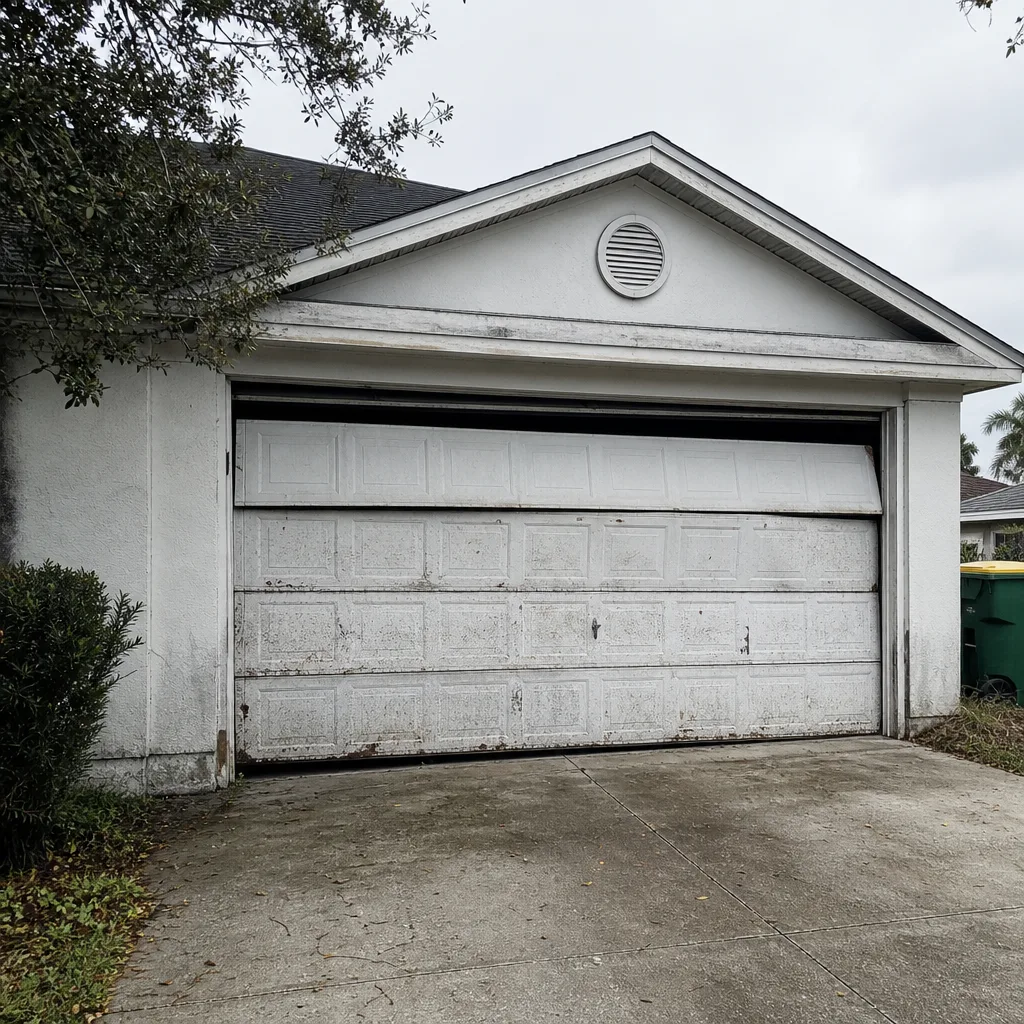 Before
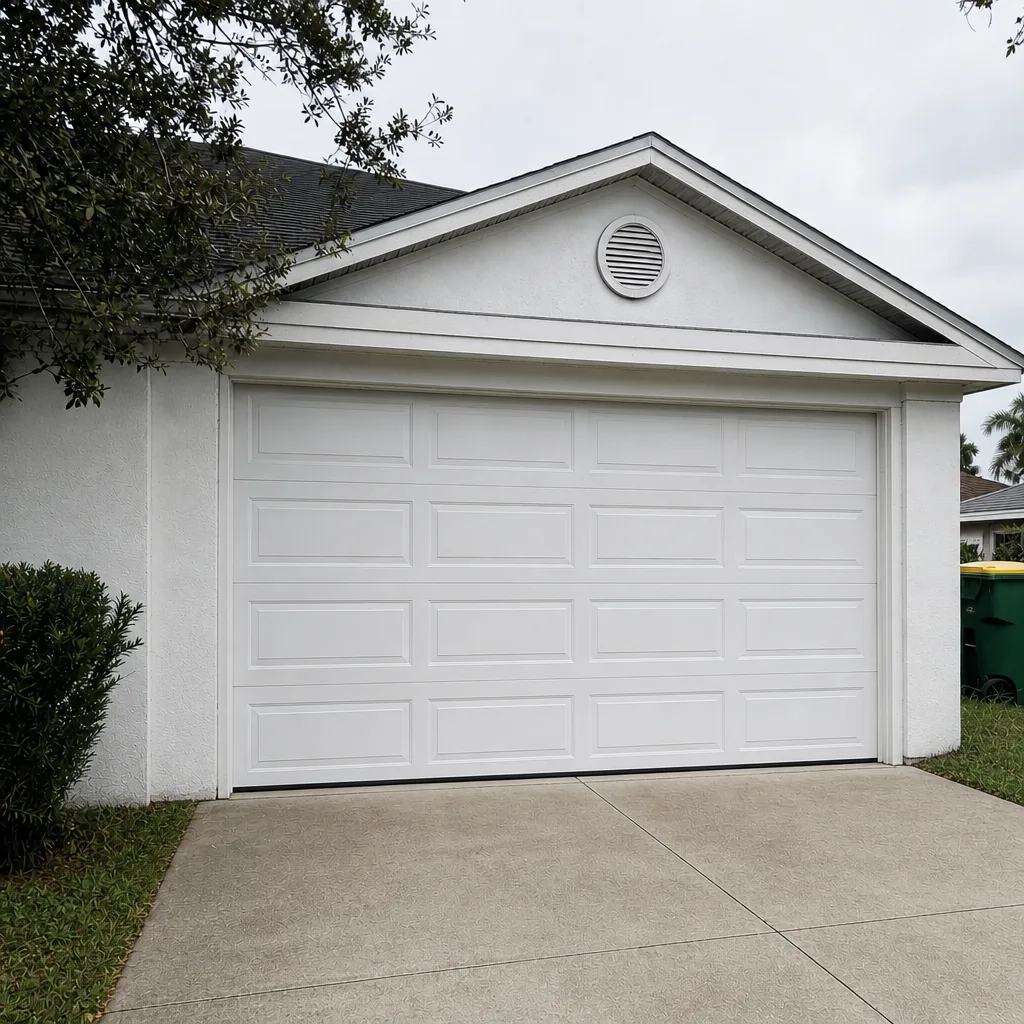 After
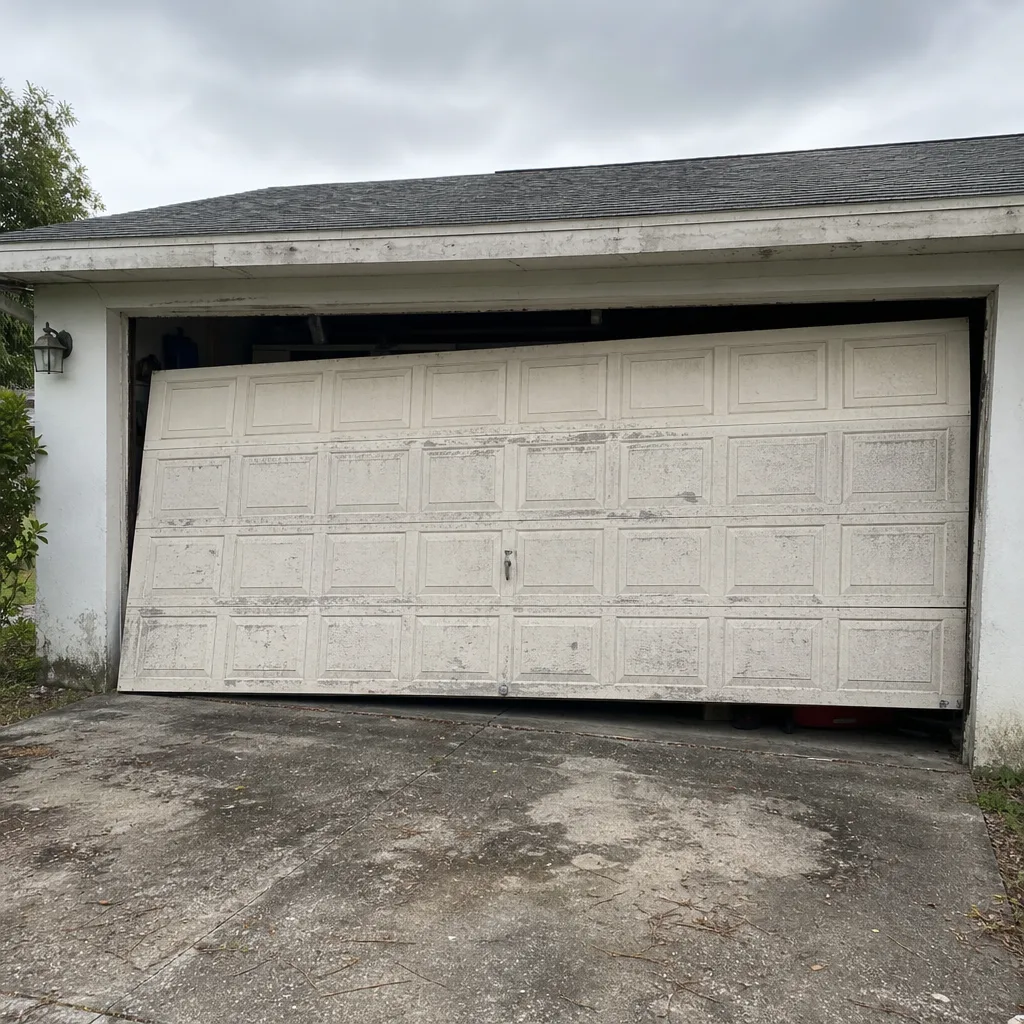 Before
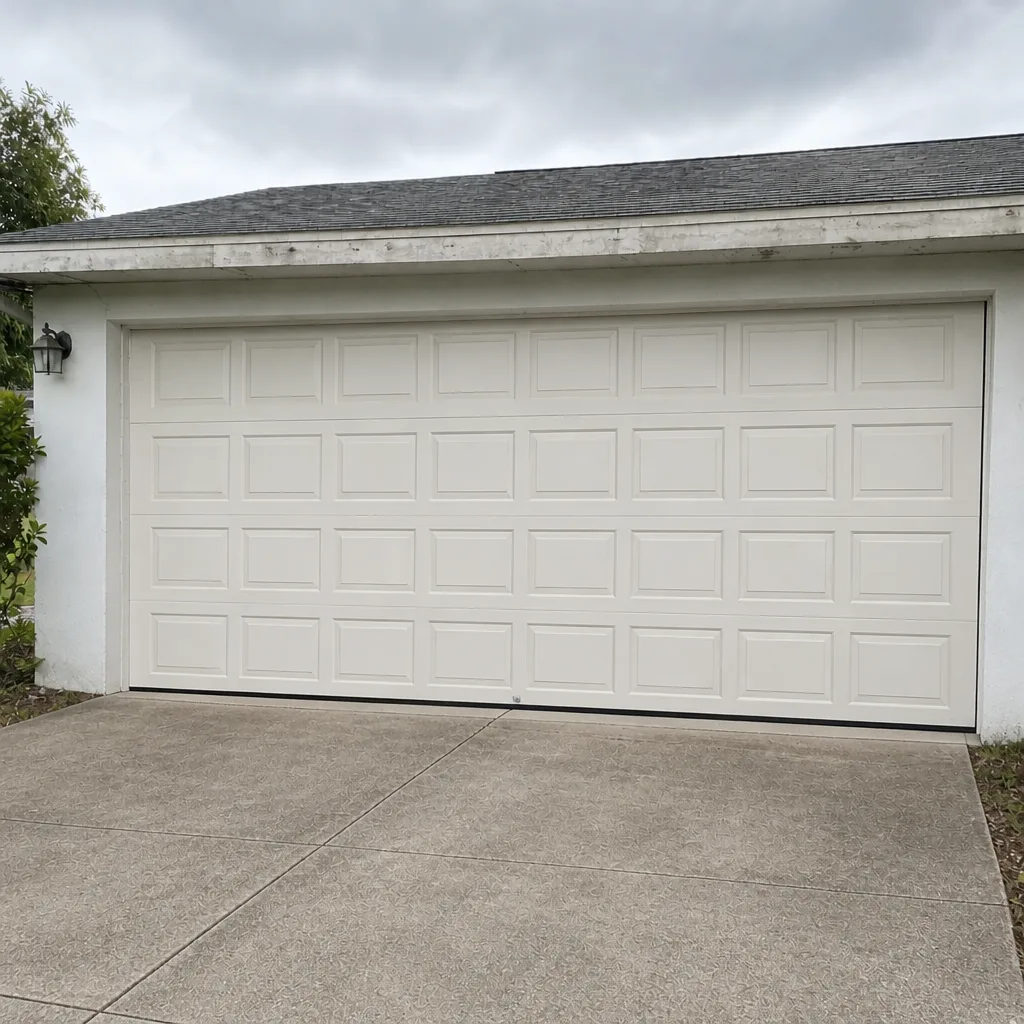 After
When to Call a Professional
There are a handful of moments in this process where a professional makes the difference. If you’re planning a full door replacement and want to know what the permit process and the correct door spec look like from the start, that’s the moment to call. If your permit was pulled but you haven’t ordered a door, and you’re unsure which specific model meets the code requirement for your address, that’s a call. If a previous door replacement on your home has no permit and a home sale is coming up, that’s a call. And if a spring has snapped, a cable is visibly frayed, or the opener won’t hold safety reversal, call us – a torsion or extension spring under tension is not a homeowner job, and a trained technician is the right answer.
Garage Door Repair Port Saint Lucie offers free estimates in Port Saint Lucie – call (877) 713-8285. We answer 24/7. Fast dispatch from 7am to 7pm, Sunday through Friday.
Frequently Asked Questions
Yes. A full garage door replacement requires a permit through the St. Lucie County Building Division, and the door must meet the Florida Building Code Section 1609 wind-load requirements for the address. The door model must be backed by product approval documentation matching the site’s design pressure. Call (877) 713-8285 for an exact quote on a permitted installation – estimates are free.
No. Spring replacement, along with cable, roller, hinge, and track hardware replacement, is treated as a repair to the existing door and does not trigger a building permit in St. Lucie County. The spring itself is still the most dangerous component of the door to touch, which is why we recommend a trained technician for the work. Call (877) 713-8285 to schedule – estimates are free.
Very often yes to both, and they’re separate processes. The county permit covers the structural, wind-load, and safety requirements; the HOA approval covers appearance and design standards for your Port Saint Lucie community. Submit both at the same time so the timelines run in parallel. Call (877) 713-8285 if you’d like help with the product documentation your HOA may ask for – estimates are free.
The inspector checks the door’s wind-rating label, the hardware attachment and anchor condition, the track and roller seating, and the opener’s safety reversal and photo-eye sensors. It’s a physical inspection, not a paperwork review. If the installation doesn’t match the approved spec, the contractor corrects it and the county re-inspects. Call (877) 713-8285 to schedule an installation with the paperwork right the first time – estimates are free.
It depends on scope, and it’s worth confirming with the St. Lucie County Building Division before ordering. A single damaged bottom section is often treated as a repair; replacing multiple sections or one that affects the rated assembly can push the job into permitted territory. Call (877) 713-8285 and we’ll walk through the assessment with you – estimates are free.
Yes. The permit is tied to the property, so an unpermitted replacement usually surfaces at the buyer’s inspection or closing, and the buyer can require remediation before proceeding. Retroactive permitting and correction typically cost more than the original permit. Call (877) 713-8285 if you’re trying to sort out a past replacement before a sale – estimates are free.
The Bottom Line
The permit rules for garage doors in Port Saint Lucie come down to a scope distinction: repairs to the existing door don’t need a permit, and replacements of the door – or anything that changes its wind-rated assembly – do. The wind-load requirement under Florida Building Code Section 1609 is the reason the permit exists, and the door model number on the paperwork has to match the door you receive. HOA approval is a separate process in many Port Saint Lucie communities and worth running at the same time. The biggest risks from skipping a required permit are a home sale snag, an insurer’s questions after storm damage, and remediation costs that usually exceed the original permit fee. Do the sequence right, keep the paperwork, and the door protects itself.
Written by the team at Garage Door Repair Port Saint Lucie.