
Last updated November 21, 2026
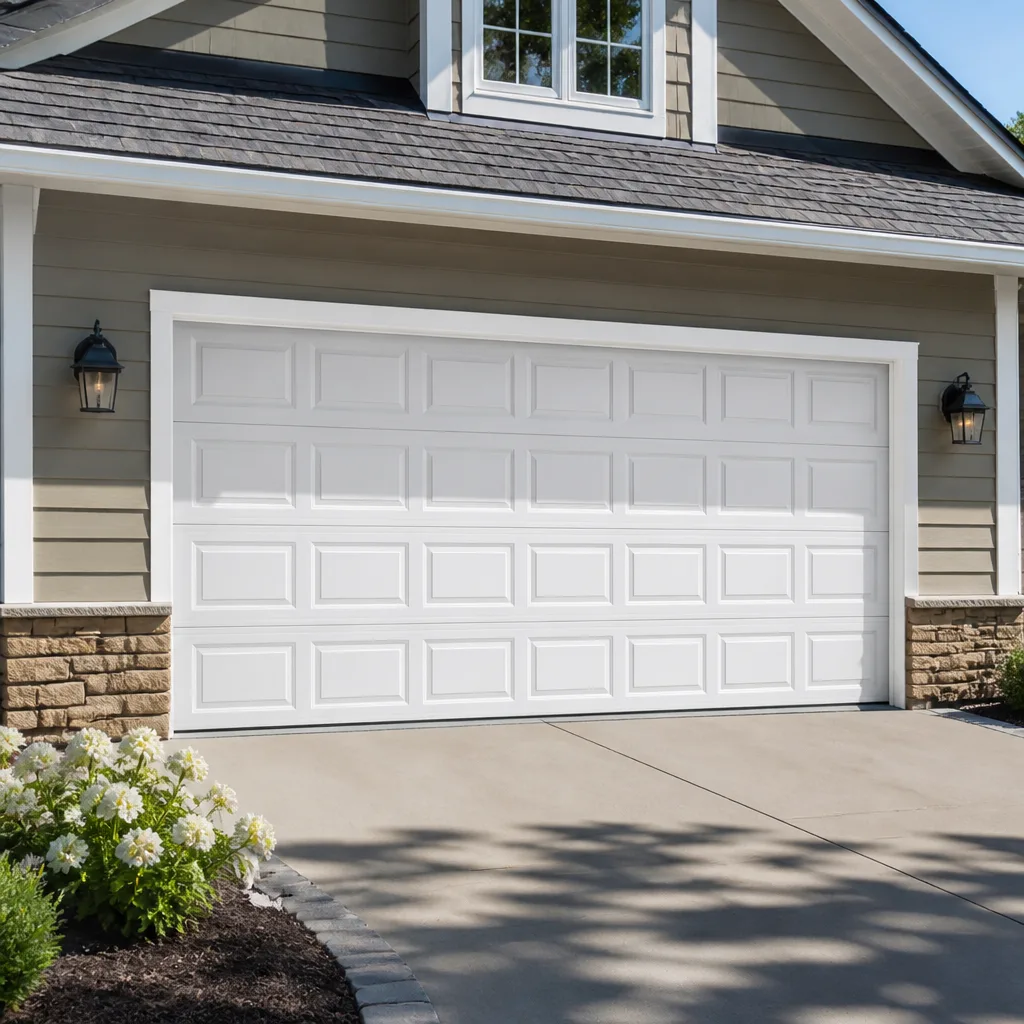 Raised-panel steel
 Carriage house
 Modern flush
 Full-view glass
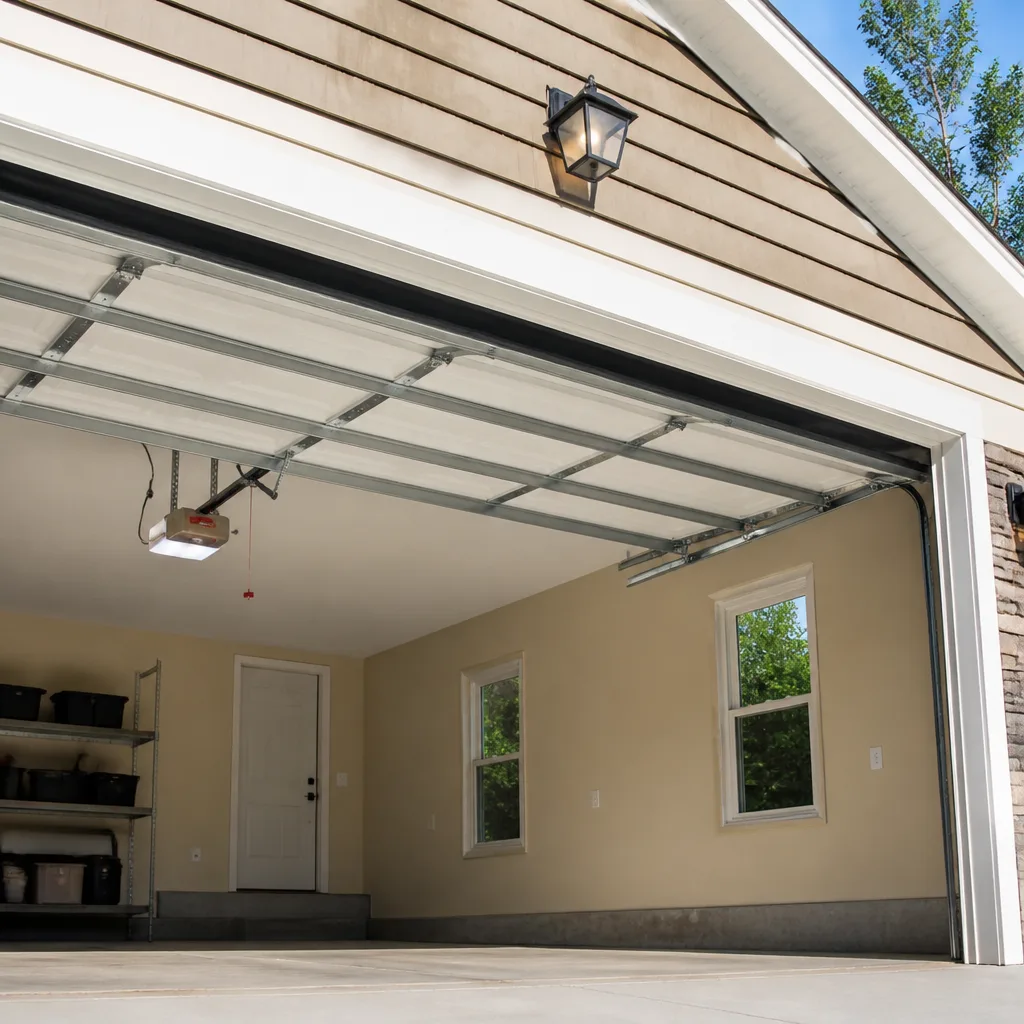 LiftMaster openers
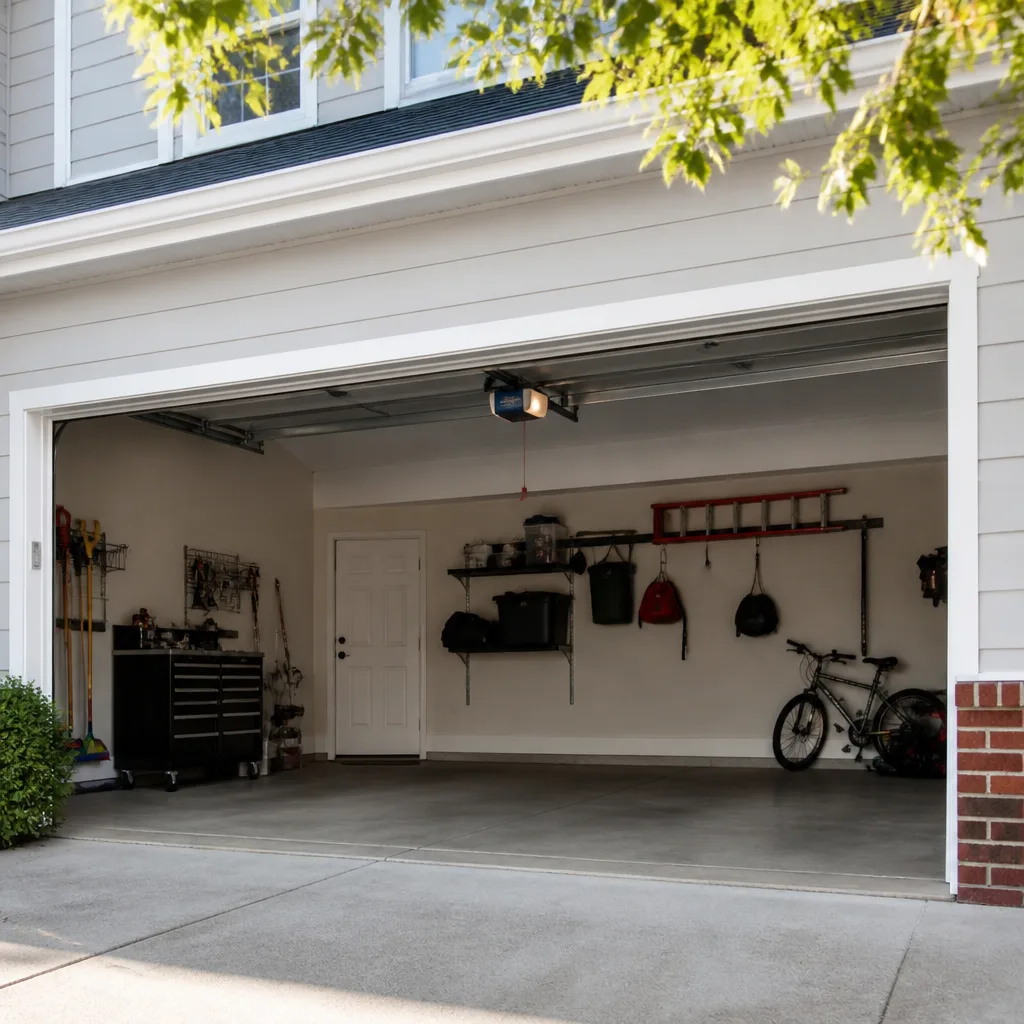 Chamberlain openers
Full 25-point door and opener safety check with every visit - springs, cables, rollers, tracks, and your LiftMaster or Chamberlain opener included
You get a price before we start. It does not change when the pro arrives.
Get your free estimateGarage Door Repair Maintenance Checklist for Port Saint Lucie Homeowners
Most maintenance checklists you’ll find online are written for a garage door in Ohio or Minnesota. They obsess over winter, ice and road salt. Port Saint Lucie doesn’t have those problems. What it has is year-round humidity, heavy summer rain, and a growing number of homes with doors that were installed a decade or more ago. The parts that actually fail here are the ones a northern checklist buries at step nine. So we’ve built this one backward from the repair calls that come in most often around Port Saint Lucie, in priority order. By the end you’ll know what to inspect, when to look at it, and where the line sits between a normal chore and a job for a technician.
Quick Answer
The most effective garage door maintenance in Port Saint Lucie starts with three things: lubricate the torsion spring shaft and the moving parts on the frame, check the bottom seal for hardening and gaps, and confirm the door moves freely along its tracks with no slack or wobble. Do a light walk-around in May before storm season and a full check in October after the humidity peak. Springs, cables and drums are not DIY territory – leave those to a trained technician.
Styles & brands we work with
- Raised-panel steel
- Carriage house
- Modern flush
- Full-view glass
- LiftMaster openers
- Chamberlain openers
Table of Contents
- Why Port Saint Lucie Doors Fail in a Different Order
- The Priority Order: What to Inspect First in Port Saint Lucie
- The Right Lubricant for Each Component (Not One for Everything)
- The Cable Drum Check Most Homeowners Skip
- Seasonal Checkpoints Tied to Port Saint Lucie’s Year
- DIY vs. Technician: Where the Line Sits and Why
- What the Opener Needs That Nobody Checks
- Common Mistakes to Avoid
Why Port Saint Lucie Doors Fail in a Different Order
Garage doors fail in a predictable order wherever they are, but that order shifts with the climate. In a place with hard winters, the freeze-thaw cycle is the aggressor. Concrete shifts, tracks move, seals crack, and every spring mechanism gets a stress test twice a year.
Port Saint Lucie works differently. Our winters are mild and our summers are humid. The enemy here isn’t cold, it’s moisture in the air for most of the year. That moisture does two things. First, it works its way into metal parts that aren’t protected with a proper lubricant – the torsion shaft, the hinges, the roller stems. Second, it hardens and shrinks rubber seals faster than you’d expect, which means wind and rain get under the door.
The result is that the first failures in a Port Saint Lucie door usually don’t involve springs or cables. They involve the parts you never think about:
- The torsion spring shaft that seizes up because nobody has ever lubricated it
- The bottom seal that goes stiff and lets insects and water inside
- The roller bearings that develop a rumble before they ever fail
- The hinges that start squeaking on a LiftMaster or Craftsman opener that’s otherwise fine
Springs do fail here too – anyone who works on doors in Port Saint Lucie will tell you that. But the reason a lot of springs fail is that everything connected to them has been fighting back for years. A door that binds on its tracks forces the spring to work harder on every cycle. A shaft that hasn’t seen grease in five years adds drag. Handle the small stuff and the big stuff lasts longer.
The Priority Order: What to Inspect First in Port Saint Lucie
Here’s the sequence we’d follow if we were looking at a Port Saint Lucie door on a Friday afternoon. It goes in descending order of failure frequency in this market. Work through it in one pass rather than jumping around.
- Torsion spring and shaft. Look at the spring, note its color (springs are color-coded), and check whether the shaft is rusted or dry. Look for a visible gap in the spring coil. Try the door manually: if it feels much heavier than it used to, the spring is tired. Never try to adjust or replace the spring itself – see the safety note below.
- Bottom seal and weatherstripping. Run your hand along the rubber bottom seal. It should be soft and flexible. If it’s hard, cracked or coming away from the aluminum retainer, it needs to go. Same for the vinyl or rubber strips on the sides and top.
- Track alignment. The tracks on both sides should be straight and parallel. Look up from the floor along each track like you’re sighting a rifle. A bent track, or one that’s been knocked by a car bumper, drags the rollers.
- Rollers and their bearings. Rollers should spin freely and quietly. Nylon rollers are quiet but wear into a flat spot; steel rollers are louder but last longer. If a roller wobbles in its stem, it’s done.
- Hinges and pivot points. Every hinge on the door panel joints is a wear point. Squeaking here is the most common “my door is loud” complaint and the cheapest to fix.
- Opener motor and drive. With the door in manual, run the opener. Listen for grinding from the chain or belt drive, and check whether the wall control and safety reverse both work.
- Cables and drums. These are visual only. Look at the cable where it winds at the drum for fraying or rust. If you see either, stop and call a technician.
If you only do the first two tasks on that list this year, you’ll still be ahead of most Port Saint Lucie homes. If you do all seven, you’ve covered what a full service visit covers.
The Right Lubricant for Each Component (Not One for Everything)
“Lubricate all moving parts” is the worst instruction in the standard checklist, and it’s the one most homeowners follow literally. Different parts need different products, and getting it wrong is worse than doing nothing. Here’s the breakdown.
| Component | What to Use | What NOT to Use |
|---|---|---|
| Torsion spring (the coil) | White lithium grease, sprayed lightly along the coil | WD-40 as a substitute – it displaces moisture but doesn’t lubricate for long |
| Torsion shaft / torsion tube | White lithium grease or a lithium spray at the bearings | Motor oil – it drips and attracts grit |
| Hinges and roller stems | Silicone spray or white lithium grease | Graphite powder – it clumps in humidity |
| Rollers (nylon) | Nothing. Leave them alone. | Any lubricant – it attracts dust and speeds wear on nylon |
| Rollers (steel) | A small amount of motor oil or white lithium on the bearing only | Grease on the roller surface itself |
| Tracks | Nothing. Wipe with a dry cloth. | Oil or grease – it traps dirt and creates a grinding paste |
| Weatherstripping and seals | Silicone spray (light coat) to keep rubber pliable | Petroleum-based products – they degrade rubber |
| Opener chain or belt (if exposed) | The manufacturer’s specified grease. Check your LiftMaster or Craftsman manual. | Generic spray grease of unknown type |
The single most under-lubricated part on Port Saint Lucie doors is the torsion spring shaft and its bearings. Standard checklists put it at step nine. In our humidity, it should be near the top. A dry shaft forces the spring to twist against friction on every open and close. Add a light coat of white lithium grease along the coil, and a few drops at the shaft bearings on each end, and you’ll notice the door is quieter within a week.
One more thing: don’t use WD-40 as your all-purpose answer. It’s a decent light penetrant and moisture displacer, but it isn’t a lasting lubricant and it doesn’t belong on springs or hinges. If you only own one product for the door, make it white lithium grease. If you own two, add a silicone spray for the rubber.
The Cable Drum Check Most Homeowners Skip
The cable drums are the grooved spools at each end of the torsion shaft where the lift cables wind. Nobody teaches homeowners to look at them, and in Port Saint Lucie they fail more often than you’d think – not because the drums themselves are weak, but because the cables that wind on them corrode in the humidity.
The failure mode is a story you can hear before you see it. A lift cable on a door in this climate will develop light surface rust over a few years. That rust roughens the cable. Each time it winds onto the drum, it grinds a little more of the drum’s groove away. Eventually a strand of the cable frays. When it finally snaps, the whole door drops on one side, sometimes on top of a car, sometimes on whoever is standing under it.
Here’s what to look for, in plain terms:
- Cable condition. Run your eyes down each cable from the drum to the bottom bracket. Surface rust gives you an early warning. Frayed strands, a “fuzzy” look, or a cable that’s starting to kink means stop now.
- Drum wear. Look where the cable winds onto the drum. If the groove looks deep, uneven or shiny-worn, the drum may be past its useful life.
- Slack on one side. If one cable is noticeably looser than the other with the door fully closed, something is off. Don’t try to tighten it yourself – a loosened cable under tension is a serious hazard.
Replacing a cable and drum set is a trained-technician job, and it’s precisely the kind of call we handle for Port Saint Lucie homeowners whose doors let them down on a hot afternoon. If you see rust or fraying, stop operating the door and call.
This is also where a Wayne Dalton or Raynor door may have specific drum and cable hardware that a generalist can’t source quickly. We stock and source parts for both brands, which means the right part on the first visit instead of a second appointment three days later.
Seasonal Checkpoints Tied to Port Saint Lucie’s Year
The generic advice is “check your door every spring and fall.” That works when your seasons have clean edges. Port Saint Lucie has two seasons (wet and dry) and two transitions. Tying your maintenance to those transitions means you inspect what’s actually at risk at the right time.
May: Pre-Hurricane-Season Check
Atlantic hurricane season opens June 1. The week or two before that opening is the right time for your heaviest check of the year in Port Saint Lucie. This is when you want to:
- Confirm the bottom seal is soft and makes full contact with the floor – a door that doesn’t seal winds up allowing storm-driven water under it.
- Test the opener’s safety reverse (the mechanical and photo-eye tests) so you know the door will reverse on contact with an object.
- Check the manual release and make sure it works from inside.
- Look at the door hardware for any loose hinge or track bracket that could vibrate in high wind.
- Confirm nothing is blocking the inside of the door or stored against the tracks.
If your door is a LiftMaster or Chamberlain opener with a battery backup, test the backup at this point too. That’s when a few seconds spent on the backup actually matters.
October: Post-Humidity-Peak Check
By October, Port Saint Lucie’s doors have been through the wettest, most humid stretch of the year. This is when the small stuff shows up: a bottom seal that’s now gone hard, a shaft that’s rusted slightly, hinges that squeak. October is your full re-lubrication checkpoint. Do the priority list top to bottom and you’ll catch the problems that started in July.
Annually: Full Inspection
Once a year, ideally in the October slot, run the entire checklist. If you want a technician to do it once a year and you handle the light chores in between, that’s a sensible split. We can run the full inspection and tell you what’s fine, what’s on the way out, and what should be addressed today.
The seasonal divide matters most for older doors in Port Saint Lucie neighborhoods where the housing stock is now in its second decade of service. A door installed ten years ago is entering the window where seals, rollers and springs start to show their age – and those steps happen faster with humidity than in a dry climate.
DIY vs. Technician: Where the Line Sits and Why
The most common garage door injury in the country involves the torsion spring. We treat that as the dividing line, not as a suggestion. Here is the breakdown of what’s reasonable to handle yourself and what isn’t, with the specific reason for each.
| Task | DIY? | Why |
|---|---|---|
| Spray lubricant on spring and shaft | Yes | Low risk. The spring stays under tension, you’re not touching it. |
| Wipe down the tracks | Yes | No moving parts. Just don’t bend them. |
| Inspect bottom seal and weatherstripping | Yes | Visual and touch check. No risk. |
| Replace bottom seal | Yes | Rubber strip in an aluminum retainer, usually fixable with a screwdriver. Reasonably low risk. |
| Test opener safety reverse | Yes | Two simple tests. Follow the manufacturer’s procedure. |
| Tighten hinge screws | Yes | Hand tools only. If the screw is stripped, stop and call. |
| Adjust or replace torsion spring | No | The spring is under extremely high tension. Touching it with the wrong tool can cause serious injury. This is the highest-risk repair on a garage door. |
| Replace cables or drums | No | Both are under tension connected to the spring. Releasing them incorrectly drops the door. |
| Realign or replace tracks | No | Track position determines whether the door stays on the rollers. Wrong adjustment means the door can come off. |
| Opener motor repair or app connectivity troubleshooting | No | Electrical and control-board work. Needs a trained eye for the specific opener brand. |
If you want a rule of thumb: if a repair involves the spring, a cable, or a track, call a technician. Everything else you can reasonably check or do yourself. And there’s no shame in having a pro look at the whole door once a year either – most homeowners in Port Saint Lucie who do this tell us they spend less on repair calls overall.
What the Opener Needs That Nobody Checks
The opener is the part of the system that gets blamed for everything. When a door is slow, noisy or inconsistent, homeowners call about “the opener.” In most cases the opener is fine and the problem is the door hardware. But there are genuine opener checks you should do, and they’re quick.
- Safety reverse test (mechanical). Lay a piece of wood flat under the door’s path. The door should reverse on contact. If it doesn’t, the opener’s force limit is set wrong or the mechanism is failing.
- Photo-eye test. Wave an object across the photo eyes near the floor. The door should reverse. Clean the eyes if they’re dusty – and check that they’re pointing at each other.
- Travel limits. If the door stops short of fully closing or slams at the bottom, the travel limits need adjusting. Do not keep operating it – this loads the motor and stresses the springs.
- Battery backup (where fitted). A LiftMaster or Chamberlain with battery backup only helps you if the battery is healthy. Test it once a year. If the beeps and warnings suggest the battery is aging, replace it.
- App connectivity and Wi-Fi. If your smart opener has dropped off your app, that’s a connectivity issue, not a mechanical failure. Reset the Wi-Fi module or re-pair the app. For a Craftsman or Genie smart opener, the process is brand-specific and worth following exactly.
If any of those tests fail, or if the opener is making grinding or clicking sounds with the door disconnected, that’s when you’re looking at garage door opener repair rather than general maintenance. We handle LiftMaster, Chamberlain, Genie, Craftsman, and other major opener brands, including Wi-Fi connectivity and app pairing problems.
Common Mistakes to Avoid
- Spraying oil or WD-40 on everything and calling it maintenance. That mists onto the tracks and creates a grinding paste. In Port Saint Lucie humidity, the grit sticks. Match the lubricant to the part as shown in the table above.
- Skipping the spring shaft entirely. Most “maintenance” is really just “I greased the rollers.” The torsion shaft is where humidity damage hides. It needs white lithium grease once or twice a year.
- Using the opener as a test for a struggling door. If the door is hard to lift by hand, the springs or the tracks are wrong. Forcing the opener to push through it wears the motor and shortens the life of everything.
- Adjusting the torsion spring because the door feels heavy. This is the most dangerous mistake on the list. The spring is under enough tension to break bones or cause worse. Call a technician who specializes in it.
- Replacing just one spring on a matched pair. If one spring broke, the other one has been doing double duty since. A matched pair is usually replaced together – and a pair costs about twice what one spring does. Replacing only one usually gets you a second call within a year.
- Ignoring a small rust line on the cable. In this climate a rusty cable is a fraying cable, and a fraying cable can snap. It’s the safest thing on the door to check and one of the least safe to ignore.
- Forgetting the pre-storm test in May. The week before June 1 is a lot cheaper than the week after a storm, when you find the seal is leaking or the opener’s safety reverse has failed.
For the record, we’ve watched all of those mistakes turn into repair calls in Port Saint Lucie. Getting the order right avoids most of them.
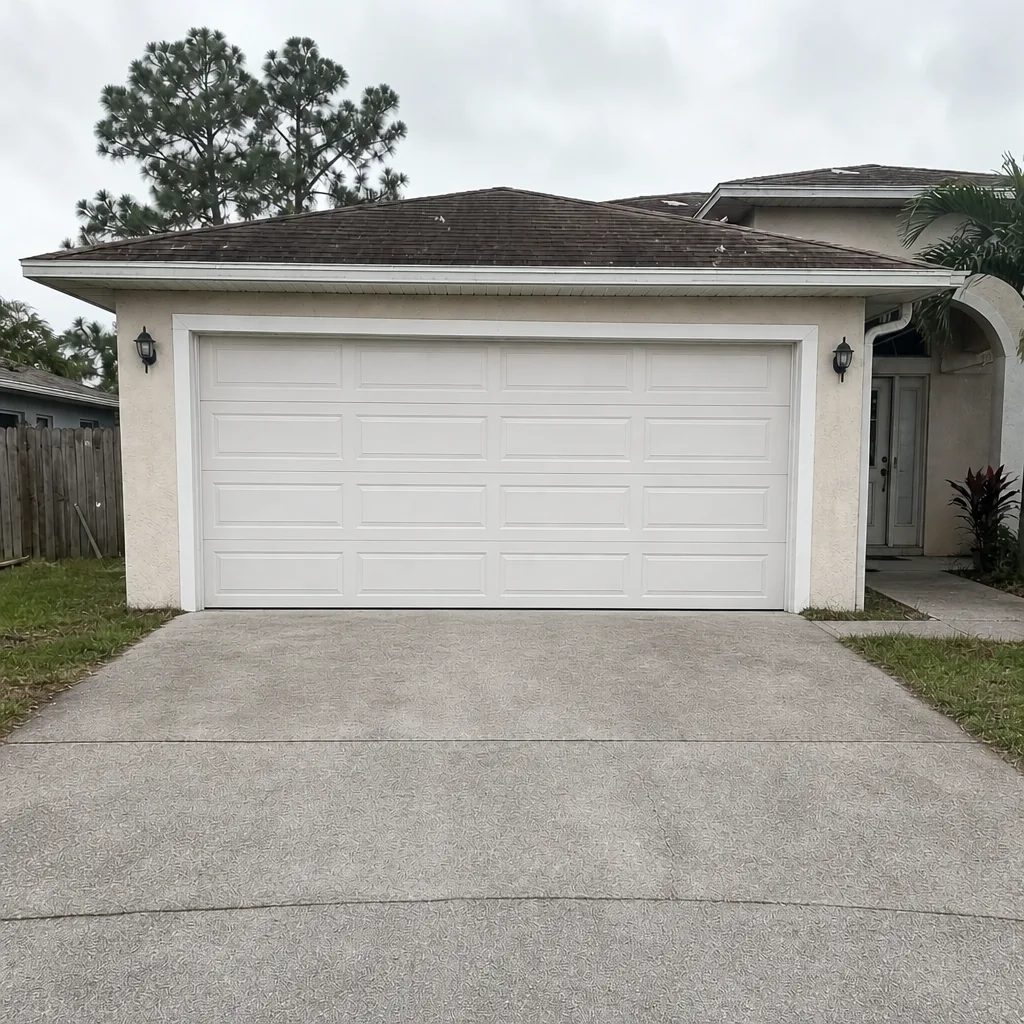
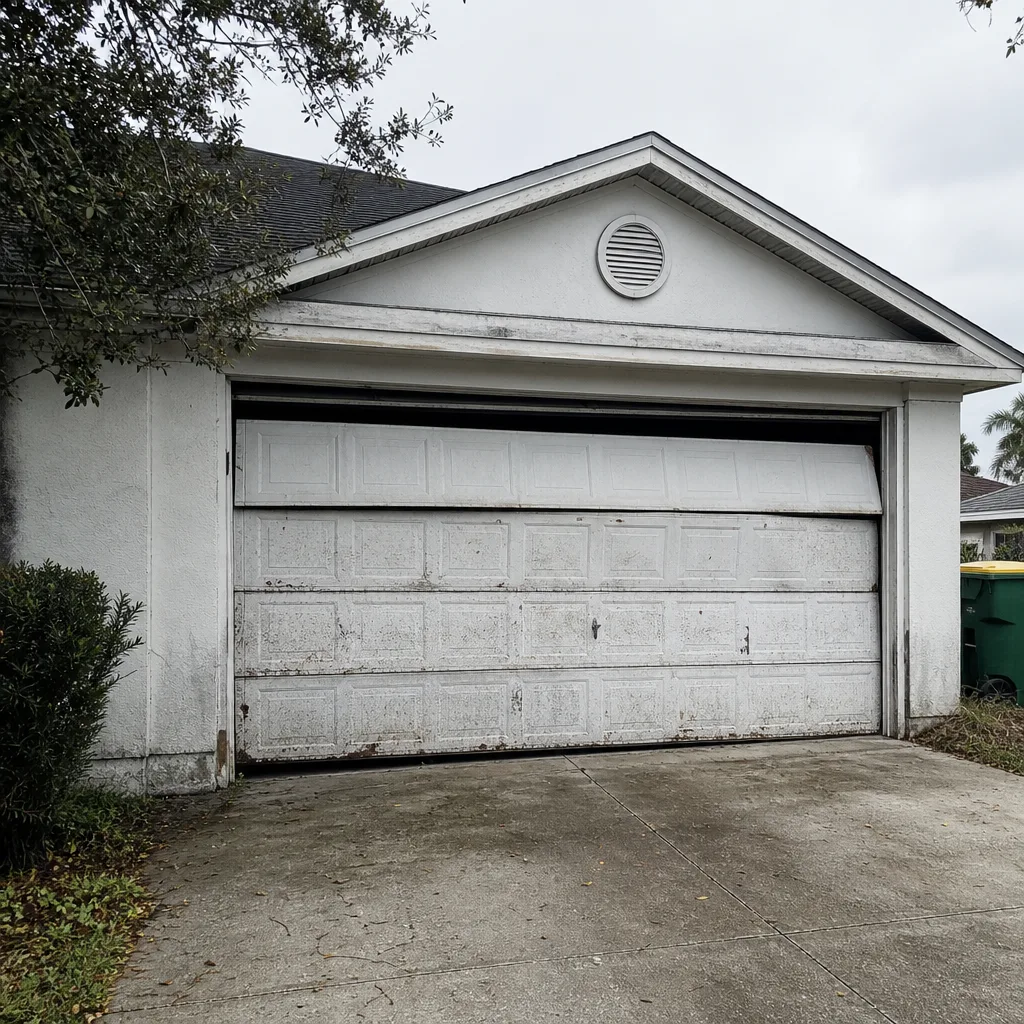
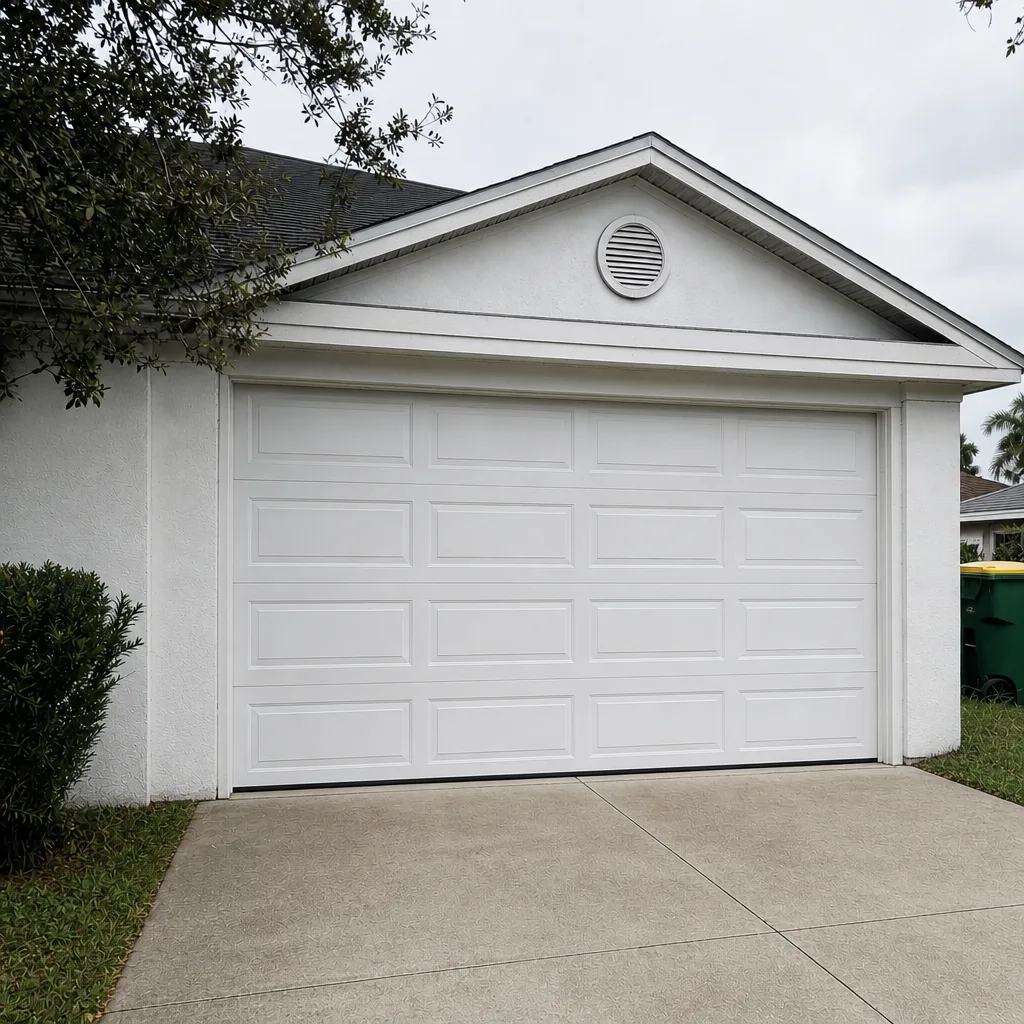
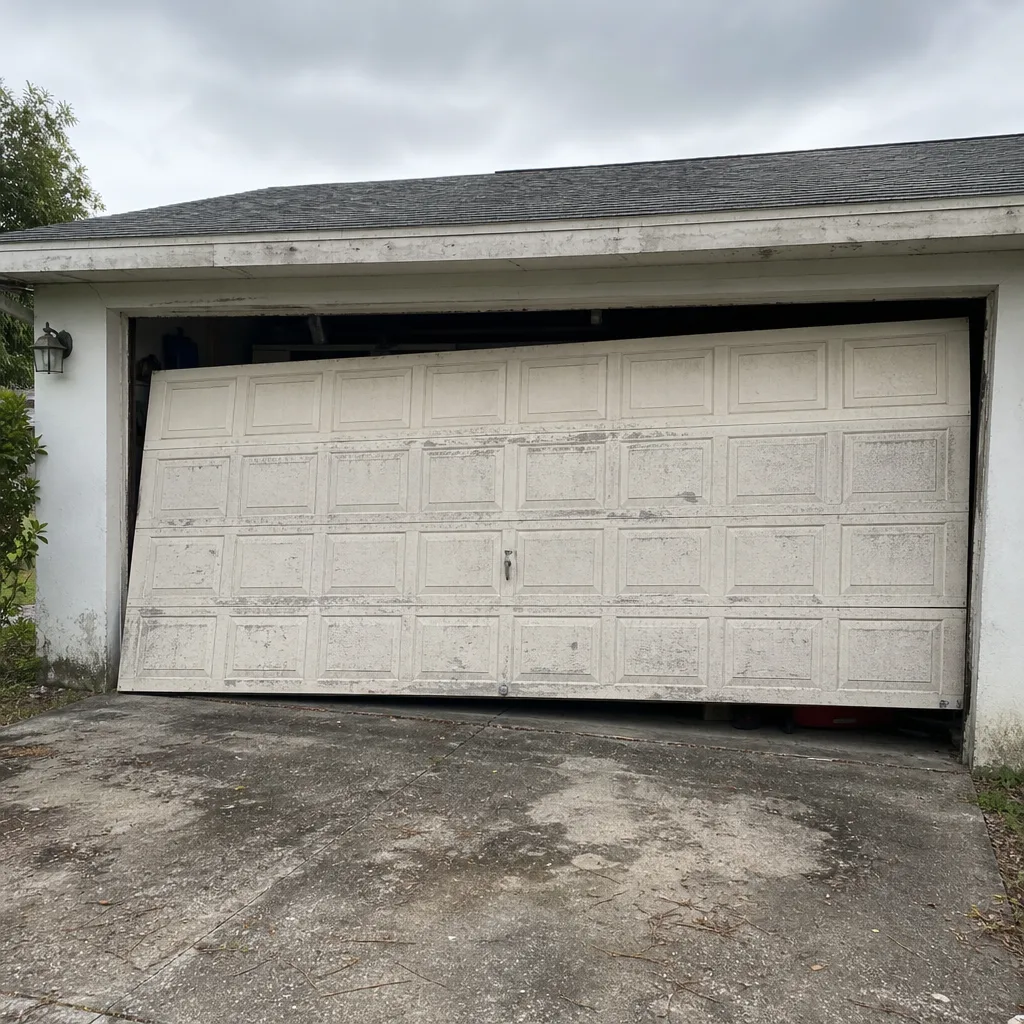
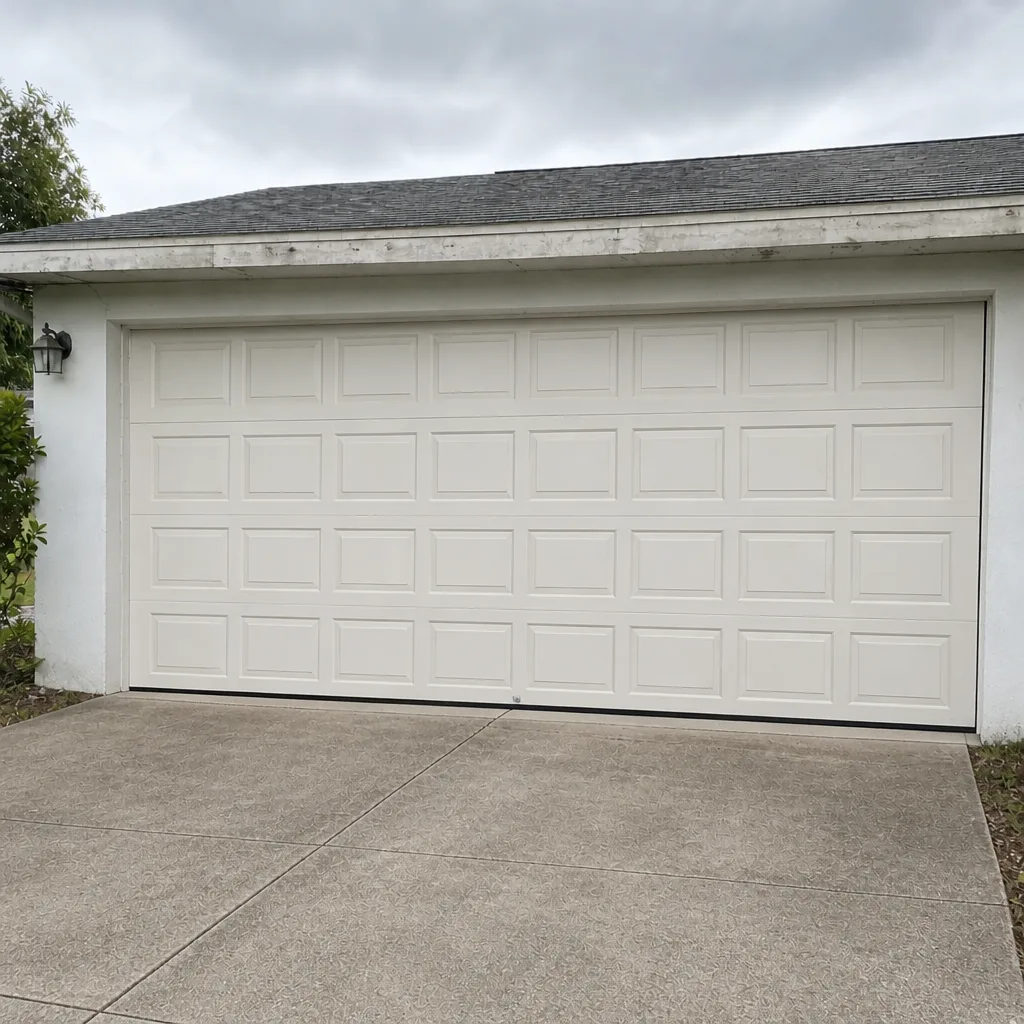
See the difference
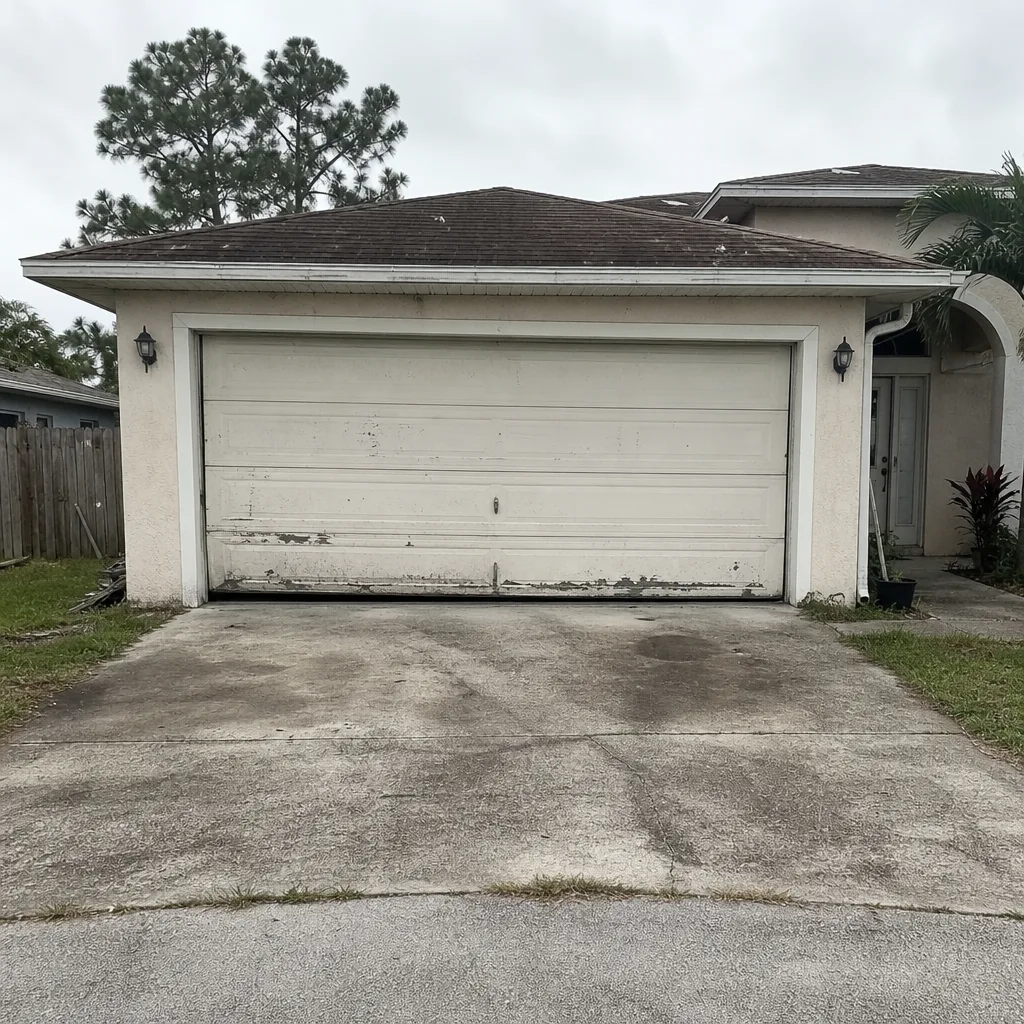 Before
 After
 Before
 After
 Before
 After
When to Call a Professional
Call a professional when the checklist turns up anything on the spring, cable, track or drum list. Also call if the door is noticeably heavier by hand than it used to be, if the door comes off its rollers, if the opener reverses when it shouldn’t (or doesn’t when it should), or if the safety reverse test fails. These are the cases where a technician’s job is to make the door safe, not just to make it move. Our technicians have up to 9 years of experience, and we specialize in garage doors exclusively – no general handyman work, no other trade. If you want a whole-door inspection rather than just a spot check, that’s a reasonable call too.
For a full service visit, our Garage Door Repair Port Saint Lucie team will run the checklist proper, tell you which items are urgent, and give you a written quote before any work begins. If you need garage door repair after a spring, cable or opener failure, that call can often be handled the same day. Garage Door Repair Port Saint Lucie offers free estimates in Port Saint Lucie – call (877) 713-8285. We answer 24/7. Fast dispatch from 7am to 7pm, Sunday through Friday.
Frequently Asked Questions
Once a year is the standard. For homes in Port Saint Lucie with doors that are now ten years old or older, once a year plus a light May check before hurricane season keeps more serious problems from developing. If your door is newer, once a year is still worth it – it’s the cheapest version of the checklist.
Lubricate the torsion spring shaft and the spring coil with white lithium grease. This single task does more for spring life in Port Saint Lucie’s humidity than every other DIY task combined. A dry shaft forces the spring to fight friction on every cycle, and white lithium grease costs less than almost any other item in your garage.
No. Garage door springs are under extreme tension, and releasing or adjusting one incorrectly can cause serious injury or worse. Spring replacement is the most dangerous repair on a garage door, and it’s the one we recommend you always leave to a trained technician. We handle torsion and extension spring work as a core service.
We’re closed Saturday. Our hours are Sunday through Friday, 7am to 7pm. If your door fails over the weekend, call and we’ll book you into the next opening. We answer 24/7.
The humidity in Port Saint Lucie gives lift cables a good environment for surface rust even with protective coatings. The cable on a door here is a wear item and its condition should be checked at least twice a year. If rust turns into fraying, replace the cable before it snaps. That’s a technician job.
In most cases yes. We work on LiftMaster, Chamberlain, Genie, Craftsman, and other major opener brands, including connectivity and app pairing. The question isn’t the brand, it’s whether the parts to fix it are available – and if we don’t have them in stock, we source them. If you also need garage door installation later, the same team can handle it.
DIY: lubrication, seals, weatherstripping, cleaning, tightening hinge screws, running the safety tests. Technician: anything involving the spring, cable, drum, or track alignment. If you’re unsure, call. We’d rather tell you it’s fine than have you find out it wasn’t.
The Bottom Line
Port Saint Lucie garage doors don’t fail in the same order as a door in a cold climate. Humidity and heat attack the torsion spring shaft, the seals, the cables and the hinges long before the door’s structural parts give out. So the checklist goes: spring and shaft first, then seal and weatherstripping, then tracks, rollers, hinges and opener. Match the lubricant to each part rather than spraying one product on everything. Do your heaviest checks in May before storm season and in October after the humidity peak. And draw a firm line at spring, cable and drum work – those need a technician, and they need one safely. Everything above is what we work on across Port Saint Lucie, and we’re glad to run the full list for you with a written quote before any work begins.
Call (877) 713-8285 for a free estimate. We answer 24/7. Fast dispatch from 7am to 7pm, Sunday through Friday.
Written by the team at Garage Door Repair Port Saint Lucie.